AI is not reducing work in the IT industry but reshaping it, said Tech Mahindra CTO Sham Arora.
Enterprises are increasingly finding IT investments more attractive, leading to higher spending on IT and IT services.
Projects are becoming faster and more predictable, delivering greater certainty of returns and improved ROI, Arora said.
AI Is Certainly Changing the Work of the IT Industry, Not Reducing It: Tech Mahindra CTO
“(With AI) enterprises are finding it more attractive to spend money on IT as opposed to other endeavours. So I see more money being spent on IT and IT services. And I also see that projects that used to take longer are now going to take less time,” Tech Mahindra CTO Sham Arora told Outlook Business

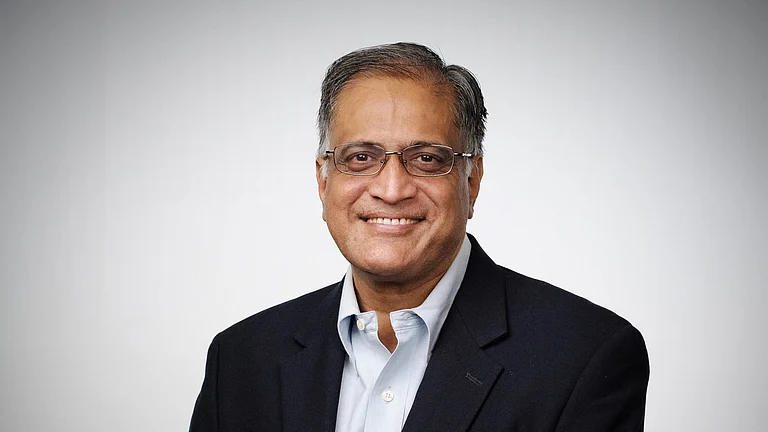
Sham Arora, Chief Technology Officer, Tech Mahindra Linkedin_#@Sham Arora
Summary
Advertisement
Artificial intelligence is not reducing the work of the IT industry, but rather changing it, said Tech Mahindra’s Chief Technology Officer (CTO), Sham Arora. According to him, with AI, the value and outcomes of the work that the industry delivers are improving, with clients getting better returns on investment.
“Enterprises are finding it more attractive to spend money on IT as opposed to other endeavours. So I see more money being spent on IT and IT services. And I also see that projects that used to take longer are now going to take less time. They are going to be more predictable and hence also create greater certainty of returns and better ROI,” Arora told Outlook Business in an exclusive interview on the second day of the India AI Impact Summit 2026 in New Delhi.
The company, which is also part of the IndiaAI Mission, is launching the second version of its foundational large language model, Project Indus, at the summit.
Advertisement
Arora also spoke about a range of issues facing the Indian IT industry — from the impact of Agentic AI on its operations to the opportunities it creates for the sector. Here’s the edited excerpt of the interview:
I want to start by asking what has changed for the IT industry with the rise of AI agents. What tasks are they capable of handling today, and where is human intervention still needed?
So much work is getting created across every layer of this cake, whether it's infrastructure and managing the GPUs, managing the new data centre operations, or the new energy production that is required to power this infrastructure; or whether it is the data layer, where the data pipelines need to be curated and made available for the models to work. Or indeed, while the companies are creating models for global consumption, there are lots of models that are also required for sovereign consumption because of privacy and security issues. And of course, it's not like one context fits all, so you also need domain excellence.
So, Tech Mahindra, for instance, is in every layer of the cake that I described so far. Also, Tech Mahindra was the first company to create its own sovereign LLM in India called Indus. And actually, at the AI Summit, we're launching version two of Indus, which is going to be used across multiple languages for training in kids' education.
So if you look at this entire cake, while the world will get more efficient in parts of the cake, there are a huge number of new spaces being created with AI where companies like Tech Mahindra operate. As long as they're open to going after the various parts of the world in place for their strengths, they're going to grow. So I don't see the work in the industry reducing.
I think the work is certainly changing, but it's perhaps going to increase. The other thing that's happening with AI is the value of work, or the outcomes that you are able to create with AI, is now getting better. So the ROI of your investments is getting better. Enterprises are hence finding it more attractive to spend money on IT as opposed to other endeavours. So I see more money being spent on IT and IT services. And I also see that projects that used to take longer are now going to take less time. They are going to be more predictable and hence also create greater certainty of returns and better ROI. So from an enterprise point of view, they're going to spend more money on IT to create better outcomes for themselves and their shareholders.
So, as I said earlier, we are using agents and AI to create new experiences. In traditional spaces, we obviously have some of the coding assist agents and some of the other testing assist agents, etc. Overall, what we've seen is that the possibilities of what we can do with AI are amazing. More and more, we're seeing AI and Agentic AI being used in creating greater value and better outcome tasks.
So, for instance, for a large energy company, we're using agents. First of all, we've created a domain SLM which allows us to understand every equipment they have and every part of the manuals that are required to maintain that equipment and ingest that. And now, whenever there's a fault, people are able to very quickly understand that. Based on the history of the faults that are there with any of the equipment, we are also able to document predictive and preventive maintenance.
So it is not that the tasks are being replaced. These are works that never used to happen earlier. It just used to take much longer to get to fixing this equipment when it broke down. And there was no preventive maintenance being done for this equipment because it came from different places. There was no real way to understand everything that was going on. So using AI, using a bit of machine learning and a bit of generative AI, we're now able to create value that didn't exist.
So that's what we're seeing, more and more customers wanting to use AI for, which is starting to create better business outcomes than what were being created earlier.
Advertisement
There is also a fear that the current IT workforce in India, or even freshers coming out of colleges, might not be at par with what’s needed in the field. Do you see that talent gap, and how do you plan to fill it?
The workforce are going to be very different. They will need to make changes. First of all, colleges and universities must constantly refresh their syllabus. I've seen them doing it as technology has moved from its initial forms to second-generation languages, to client-server technology, to 3-tier or MVC architecture, to cloud, and then to platforms and containerisation.
If you see the evolution of technology and languages and the way it is deployed, it has always evolved. I think colleges and universities will need to continue to update their syllabus in terms of teaching more and more AI and give people exposure to using Agentic AI, and all kinds of aspects from machine learning and data science and every foundational aspect that sits beneath AI.
Now, having said that, I think it's probably incorrect to say that people are unemployable. I think the right way to say it is that people need to learn new skills which create deep familiarity, understanding and experience in using AI tools. Which is why, at Tech Mahindra, for instance, 90,000 of our people are now fully certified on the way we believe AI should be used in a responsible manner. I'm sure a lot of other companies might be doing the same.
So I think constant learning of the workforce across various industries, not just the IT industry, is a reality we live in. We should all make sure that we are spending enough time as leaders and as corporate in the development and learning of our people and expect the same from the people that we are hiring.
Advertisement

Can we talk about how your clients see AI and agents? Do they perceive it as a cost-saving opportunity and what is their approach when asking for results from it?
So first of all, I don't think clients say, “come and deploy agents for us” or “come and deploy AI for us.” I think that's probably a wrong ask and a bit of a misplaced expectation. We do have a consulting side where we create the AI value office. There are still quite a few clients in that space, but more and more clients now, given that they've worked with us over the last few months, are more mature in their understanding.
But there are clients who start from, “help me understand how to derive value from AI.” And what we do with them is set up an AI value office. We look at what are the largest processes, what are the largest breaks in their processes, what are they reproducing, and how can we make those operations and supply chains more efficient, and those downtimes lesser. We look at what would create better outcomes for the client in that value office and say, if we start here, this is where you're going to get maximum value.
Another area which is a huge strength for us and quite attractive for clients, is IT operations. Every company is running some sort of IT operations. Given our network heritage, our heritage with telcos and our huge experience in running infrastructure at scale in a stable manner, we are able to typically take any company’s IT operations and create significant efficiencies and also provide advantage, because lower downtime, better-maintained equipment also costs you less effort. So we're able to reduce manual effort, automate operations and get predictable uptime and service availability.
So I think it depends upon what are the biggest pain points or the biggest opportunities for the client and those are the ones we go after. So it's much more about outcome creation as opposed to starting to sell agents to customers.
Advertisement
Tech Mahindra has built its own foundational LLM, Project Indus. As you also said, you are launching its 2.0 version at the AI Impact Summit. But so far, it hasn’t created traction like some of the Western LLMs out there, what’s the reason behind it?
If you look at the Indus model that we built, it is built very specifically using the cultural nuances from India. If you wanted to launch a platform in India, and let's say that platform is capturing the behaviours or the way people talk and you want that to be interpreted by the platform, we are going to require our model, Indus, to work on it. If you use any other model, it's not going to give you the same outcomes that you would get out of Indus.
But let's say if you wanted something different which didn’t have any Indian context, then you are free to use whatever models are available globally. So I think it is very context-specific.
A lot of people also make the mistake of taking a model out of the box and starting to use it. And sometimes that will never give you the outcomes you're looking for. Because in the first place, you may never have needed a large language model, all you needed was a small language model trained on your data and your context.
So people think that if I spend more, I'm going to get a better outcome. Mostly, that’s not the case. It is about using the right technology as opposed to the most expensive technology.
What would you say to investors concerned about the Indian IT sector’s future amid AI transitions?
I would say investors sometimes see things piecemeal, and the latest news becomes the most relevant news for them. But it's always important for investors to look at the holistic picture of what's going on overall. And if you put the overall picture together, you would know that this ecosystem is actually growing, and it's going to grow at a very significant pace. The IT industry is going to play a significant role in that and India is the talent house, the talent factory, of the entire IT industry.
So definitely, you should not be concerned. You should probably be bullish about where things are going with the IT industry.