In its interim order issued on June 3, market regulator SEBI flagged two separate investment disclosure issues at Rajesh Exports, an unsubstantiated claim of gold mining assets in Africa and a series of financial transactions involving Elest, a Bengaluru-based promoter-linked EV company.
Africa Mines, EV Deals & Unanswered Questions: Disclosures Sebi Wants Rajesh Exports to Explain
In its response, the company said it was "unable to locate its earlier response furnished to the exchange due to absence of date details" and that investments in gold mines existed through foreign subsidiaries, with the investment figures being "tallying and correct"

SEBI
Advertisement
In a statement issued to stock exchanges on June 4, Rajesh Exports said the order was interim in nature and that there had been "no adverse conclusion on any aspect arrived by SEBI."
The company said its declared revenues were correct and there was "no over stating of revenues", adding there appeared to be "some type of communication gap and confusion" between SEBI and the company. It said it was in the process of submitting the required documents to the regulator.
The Africa Gold Mine Claim
In its interim order issued on June 3, SEBI noted that Rajesh Exports' "other non-current investments" on a consolidated basis rose from ₹879.60 crore in FY21 to ₹1,035.27 crore in FY23, before jumping sharply to ₹10,547.72 crore in FY25.
The NSE had sought details from the company on the ₹1,035.27 crore figure reported as of March 31, 2023. In its response to the exchange in July 2024, Rajesh Exports said the amount pertained to "investment in gold mines in Africa", according to the SEBI order.
Advertisement
However, the regulator said this claim could not be corroborated from the financial statements and information available on record. SEBI examined the standalone financial statements of Rajesh Exports and those of its subsidiaries — REL Singapore and Global Gold Refineries AG — and found no traceable investment identifiable as gold mines in Africa.
In its response, the company said it was "unable to locate its earlier response furnished to the exchange due to absence of date details" and that investments in gold mines existed through foreign subsidiaries, with the investment figures being "tallying and correct."
SEBI said mere assertions that investments exist through foreign subsidiaries, without furnishing any traceable linkage in financial statements or supporting records, did not satisfactorily explain the disclosure.
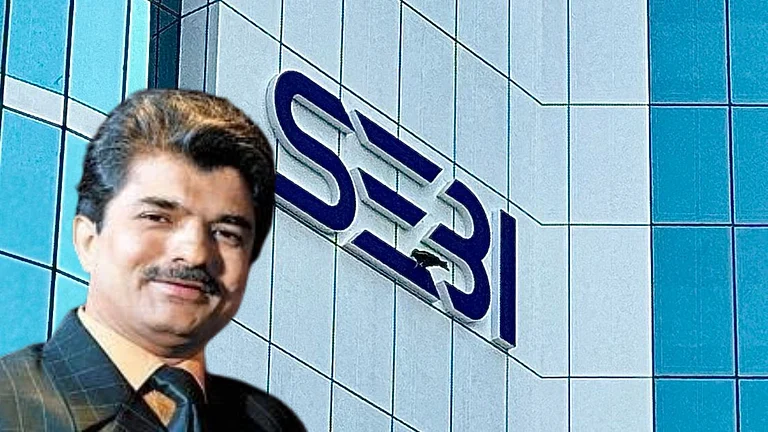
The Elest Transactions
The Elest issue raises a separate but related governance concern. SEBI noted that Elest was incorporated in October 2020 by Rajesh Mehta and his brother Prashant Mehta and was engaged in the manufacture of lithium-ion cells, battery packs, and electric vehicles. Since Rajesh Mehta was a common director and Elest was substantially owned and controlled by him, SEBI treated it as a related party of Rajesh Exports.
Advertisement
The regulator found that Rajesh Exports transferred ₹565.88 crore to Elest between FY21 and FY26, while Elest transferred ₹350.03 crore back, resulting in a net outflow of ₹215.85 crore from Rajesh Exports to Elest. SEBI said these fund movements were not adequately disclosed as related-party transactions.
SEBI also flagged a cross-holding arrangement involving ACC Energy Storage, Rajesh Exports' energy storage subsidiary. On January 1, 2025, Rajesh Exports acquired an additional 2.55 crore shares of ACC Energy at ₹60 per share, while Elest simultaneously subscribed to 2.45 crore shares at the same valuation. Following this, Rajesh Exports' stake in ACC Energy fell from 100% to approximately 51.05%, while Elest's shareholding rose to about 48.95%.
SEBI's preliminary analysis of bank statements showed that Elest transferred ₹147 crore to ACC Energy, of which ₹112 crore was transferred back to Elest on the same date. The regulator also noted that Rajesh Exports' managing director Suresh Gowda and CFO Vijendra Rao, in their depositions, said they were unaware of Elest's ₹147 crore investment in ACC Energy and a subsequent ₹262 crore investment by ACC Energy in Elest.
Advertisement
SEBI said these transactions raised concerns over diversion and routing of funds, non-transparent related-party arrangements, absence of adequate approvals, and deficiencies in disclosures to shareholders and investors. The regulator added that its examination of the company's responses remained ongoing.