The Union Budget 2026-27 has brought several changes that will directly impact household spending, travel, education, healthcare, and daily consumption. Through revisions in customs duties, tax collected at source (TCS), tax deducted at source (TDS), and penalties, the government has made some items more affordable while increasing the cost burden on others.
Union Budget 2026: What Gets Cheaper, What Costs More for Consumers
Through revisions in customs duties, tax collected at source (TCS), tax deducted at source (TDS), and penalties, the government has made some items more affordable while increasing the cost burden on others

What Gets Cheaper, What Costs More for Consumers
Advertisement
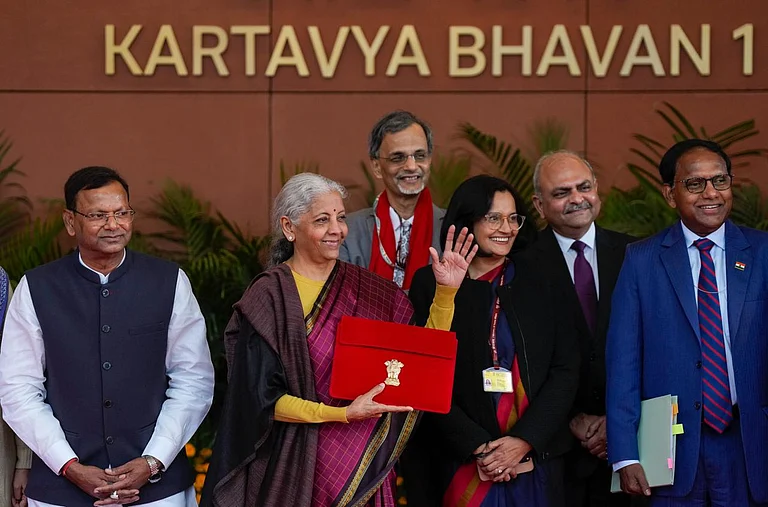
Finance Minister Nirmala Sitharaman announced these measures while outlining the government’s effort to reduce compliance burden and support domestic manufacturing.
Everything That Gets Cheaper
Foreign education and medical treatment abroad
The government has proposed reducing the Tax Collected at Source (TCS) under the Liberalised Remittance Scheme (LRS) for education and medical purposes from 5% to 2%. Additionally, manpower supply services have been clearly brought under the TDS framework, with a lower deduction rate of 1–2%, reducing ambiguity and compliance hassles.
Overseas tourism packages
TCS on foreign tour packages has been proposed to be reduced to 2%, replacing the earlier structure of 5% on packages up to ₹10 lakh and 20% above that limit. Since the revised rate has no exemption threshold, it applies uniformly, lowering the initial cash outflow for travellers.
Leather and synthetic footwear
It has allowed duty-free imports of specified inputs, which is currently available for exports of leather or synthetic footwear, as well as exports of Shoe Uppers.
Advertisement
Solar glass inputs
Duty reductions on key inputs used in manufacturing solar glass are expected to support domestic solar production and lower overall project costs.
Capital goods for critical minerals
FM Sitharaman proposed to provide basic customs duty exemption to the import of capital goods required for processing of critical minerals in India.
Energy transition and security
Basic customs duty relief on capital goods used for manufacturing Lithium-Ion Cells for batteries, to those used for manufacturing Lithium-Ion Cells for battery energy storage systems too.
Civilian aircraft manufacturing components
The Budget proposed to exempt basic customs duty on components and parts required for the manufacture of civilian, training and other aircrafts Additionally it will be exempted for raw materials imported for manufacturing of parts of aircraft to be used in maintenance, repair, or overhaul requirements by Units in the Defence sector.

Advertisement
Microwave ovens
Reduced duties on certain components used in microwave ovens may lead to lower retail prices.
Goods imported for personal use
To rationalize the customs duty structure for goods imported for personal use, the governmnet proposed to reduce the tariff rate on all dutiable goods imported for personal use from 20% to 10%.
17 cancer drugs, diabetes and rare disease-related medicines
Customs duty exemptions or reductions on 17 life-saving drugs for cancer are aimed at making treatment more affordable for patients. Additionally, the reductions are also made for diabetes and 7 rare disease-related medices.
Goods for nuclear power projects
Basic Customs Duty (BCD) exemption on imports for nuclear power projects is expected to lower project costs and support clean energy goals.
Sports equipment
Duty relief on sports goods is expected to promote wider access and encourage sports participation.
Seafood
Lower duties on select inputs and products are expected to benefit exporters and consumers alike.
Advertisement
EV batteries
Reduced import duties on components and materials used in electric vehicle batteries are aimed at cutting EV costs and supporting clean mobility.

What Gets Costlier
Income tax misreporting
The penalty for misreporting income has been increased to 100% of the tax amount, tightening compliance enforcement.
Non-disclosure of movable assets
Failure to disclose movable assets will now attract stricter penalties, increasing the cost of non-compliance.
Stock options and futures trading
The Securities Transaction Tax (STT) on futures trading has been raised from 0.02% to 0.05%, making trading more expensive.

Umbrellas and parts
Higher duties on umbrellas and related components will raise prices.
Cigarettes and beedis
Increased duties aim to discourage tobacco consumption by making these products costlier.
Pan masala and gutka
Higher taxes on these products are intended to curb consumption.
Minerals
Duties on Khanij, which is mineral like iron, coal and salt, has been increased.
Advertisement