Experts are urging the government to finalize a national framework for GCCs in Budget 2026.
They warn that fragmented state policies for GCCs are creating uncertainty for long-term global investments.
They are calling for targeted tax incentives and infrastructure support to transition India’s 1,800+ GCCs from cost-saving hubs to high-value innovation engines.
GCCs Await National Framework as States Lure Global Firms to Tier 2, 3 Cities
In Union Budget 2025, Finance Minister Nirmala Sitharaman announced a "National Guidance Framework" to help states attract and support GCCs. However, this framework is still in the draft stage, with consultations ongoing

Budget 2026: GCCs Await National Framework as States Lure Global Firms to Tier 2, 3 Cities
Summary
Advertisement
As the Union Budget 2026-27 approaches, one sector closely awaiting announcements is the Global Capability Centre (GCC) industry, which is looking for the government to move from intent and announcements to concrete action.
A year after the Centre promised a national framework to promote GCCs beyond metro cities, the policy is yet to be implemented, even as global companies continue to seek clarity on incentives, taxation and long-term stability.
With India’s GCC sector expanding rapidly and Tier-2 and Tier-3 cities seen as the next growth frontier, industry leaders say Budget 2026 must deliver concrete measures to support engineering, AI and product-led GCCs, ensure policy predictability and unlock the next phase of distributed global investment.
Over the years, India has become the preferred destination for GCCs because of its large talent pool, cost advantage and strong technology ecosystem. Today, India hosts over 1,800 GCCs and employs over 2 million professionals in these centres. Industry estimates suggest that by 2030, this number could grow to 2,500 GCCs, contributing nearly 3.5% to India’s GDP.
Advertisement
Govt’s Push Beyond Big Cities
Currently, most GCCs in India are concentrated in major metro cities like Bengaluru, Mumbai, Hyderabad and the National Capital Region (NCR). To spread growth more evenly, the government has been encouraging companies to set up GCCs in Tier-2 and Tier-3 cities.
In Union Budget 2025, Finance Minister Nirmala Sitharaman announced a "National Guidance Framework" to help states attract and support GCCs. The idea was to provide a common direction while allowing states to compete on execution, infrastructure and ease of doing business.
However, this framework is still in the draft stage, with consultations ongoing, according to reports. There is no central, enforceable national GCC policy yet, which is creating uncertainty for global companies planning long-term investments in the country.

Uneven Progress on the Ground
According to Lalit Ahuja, Founder and CEO of ANSR, the government’s intent is correct but execution remains uneven.
Advertisement
“The intent behind promoting GCC growth beyond Tier-1 cities is right, but progress so far has been uneven and execution-led rather than demand-led,” Ahuja said.
He explained that while some Tier-2 cities are seeing early traction, global enterprises still face challenges around talent depth, infrastructure readiness and policy predictability when planning large-scale expansion.
Global companies typically plan GCC investments over a 10-15 year horizon, making policy stability and long-term clarity critical.
Call for a National GCC Framework
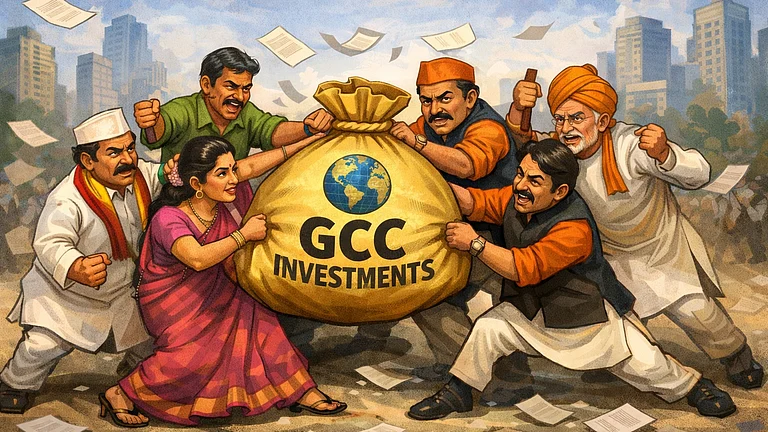
Another concern highlighted by industry leaders is the growing number of state-specific GCC policies, each with different incentives and compliance requirements.
“State-led GCC policies are a welcome development, but the current situation is creating uncertainty for global enterprises that plan India GCC investments over a long-term horizon,” said Ahuja. He warned that as the ecosystem scales, fragmented policies could become a real risk.
According to him, India now needs a national GCC framework that standardises definitions, offers baseline regulatory and tax clarity, enables single-window approvals, and aligns talent and skilling initiatives at the national level. States, he added, should continue to compete on infrastructure and execution, but within a consistent national policy structure.
Advertisement

What Industry Wants from Budget 2026
Experts believe Budget 2026 should move decisively from policy signalling to concrete action. Ahuja said the Budget should focus on targeted incentives for engineering, AI and product-led GCCs, particularly in Tier-2 and Tier-3 cities, along with shared investments in infrastructure and skilling.
More importantly, he said, the Budget must send a strong message that India sees GCCs not as cost centres, but as strategic engines for innovation, intellectual property creation and global product ownership, backed by stable policy support.
Tax and Innovation Expectations
Analysts at Deloitte have also outlined specific Budget expectations for GCCs. These include introducing a concessional corporate tax regime or tax holidays for new or expanding GCCs, similar to benefits earlier offered to manufacturing units. Such measures, they say, could attract the next wave of global investment in high-value activities like R&D, AI and product engineering, while strengthening India’s global GCC market share.
Advertisement
There are also calls for weighted tax deductions on R&D and innovation spending, accelerated depreciation on digital and AI infrastructure, and incentives to encourage GCCs to move up the value chain from cost-plus service models to innovation-led structures.

Talent, Infrastructure and Clarity
Other expectations include tax incentives for GCC employees in Tier-2 and Tier-3 cities, clearer rules on taxation of employee secondment and cost-sharing arrangements, and targeted tax support for data centres, which are critical for AI and cloud-driven GCC operations.
Industry leaders believe that addressing these areas in Budget 2026 would reduce compliance costs, improve ease of doing business, and strengthen India’s position as the world’s most strategic GCC destination.
“These changes would not only strengthen India’s value proposition but also send a clear signal to global CEOs that India is committed to long-term GCC growth,” Ahuja said.
GCCs are increasingly driving high-quality jobs, innovation and global decision-making and in this regard, Budget 2026 is seen as a crucial opportunity to convert strong momentum into long-term investment.