Sustainable development goals, global reporting initiative disclosures and a parade of sustainability standards have pushed the gender conversation centre stage. The visibility has helped, but it has also trapped the narrative in a narrow frame. As headcounts became headlines, mindset shifts, power structures and lived experiences quietly slipped to the footnotes.
Why India Inc Needs to Reimagine Gender Equity Beyond Headcount
Reimagining gender equity beyond numbers, focusing on contribution, systems and inclusion

Reflecting equity beyond numbers
Advertisement
If transparency is the goal, numbers will always win. If equity is the goal, deeper deliberations will win.
Our observation is when organisations talk about gender, the spotlight often falls on numerical disclosures—percentages, ratios and charts that showcase representation. Initiatives are then framed around improving numbers. For example, many organisations talk about the percentage of women on their boards, but no one talks about the impact the inclusion had.

While representation matters, gender equity cannot and should not be reduced to a statistical exercise. Numbers were a good starting point and have served their purpose of mainstreaming gender conversations.
When gender becomes a metric rather than a lived experience, equity turns into compliance rather than transformation/development. To fully reimagine gender equity beyond headcount, a scientific or analytical exploration in the invisible layers of contribution that shape our social and economic systems is required.
Advertisement
To truly understand gender, we must look through the full prism of DEI—diversity, equity and inclusion—each offering a different truth.
Diversity asks us to recognise all forms of contribution, not just the visible or paid. Equity challenges us to design support that reflects unequal realities, not uniform rules. And inclusion calls us to reshape the very systems that determine who thrive. When viewed together, the three dimensions expose both how far we’ve come and how far we still need to go.

Diversity: Recognising Contribution, Not Just Presence
Diversity has long been interpreted as representation, which is a limited view. We believe that true diversity is acknowledging that all people contribute to society, albeit in fundamentally different ways.
Women, for instance, shoulder a disproportionate share of unpaid care work, which includes childcare, eldercare, household management and emotional labour. Arun Maira in a recent post quoted, “Women’s unpaid care work in India represents 15-17% of GDP, yet it is treated as if it contributes nothing.” This unaccounted labour sustains economies, stabilises societies and enables the formal workforce to exist, yet it remains outside most organisational and policy frameworks.
Advertisement
Most dialogues on gender, for one, do not recognise these foundational contributions and, secondly, overlook the unequal caregiving expectations that shape women’s participation in the workforce.
Recognising contributions and redefining diversity can broaden the lens: to acknowledge who performs what kind of labour, to validate the immense value of unpaid care and to recognise contribution in all its forms, beyond payrolls.
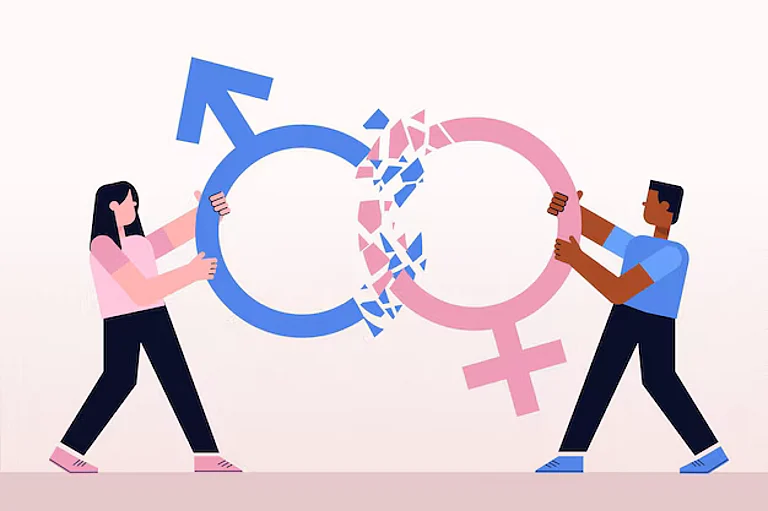
Equity: Providing Support, Not Uniformity
Equity is often mistakenly equated with equality. Equality gives everyone the same resources whereas equity gives everyone what they need to thrive.
A gendered lens makes this distinction unmistakably clear.
Women often carry dual roles of professional and caregiving. Highlighting this reality is not to suggest that women ought to bear the care work responsibilities, but to acknowledge the current imbalance so that it can be addressed, redistributed and better valued. Treating everyone the same ignores these unequal burdens.
Advertisement
Equity is our way of saying: We see your reality, and we will enable your full participation and growth. Equity then goes on to mean flexible work that does not come with penalty or stigma, childcare support that enables true participation, safety and well-being frameworks that recognise gender-specific risks, and career pathways that do not punish caregiving breaks.
Equity is acknowledging invisible emotional and mental loads.

Inclusion: Committing to Reshape Systems, Not People
Inclusion is often positioned as belonging. But belonging cannot be achieved if the underlying structures are unyielding. At its essence, inclusion is a commitment to redesign systems, so individuals do not have to reshape themselves to fit in.
Inclusion demands re-evaluation of norms built around uninterrupted careers or constant availability, redesigning leadership expectations to value diverse styles, creating environments that accommodate varied life journeys and redistributing influence, not just offering symbolic participation.
Advertisement
This is a more mature view of inclusion—one that accepts that the systems of yesterday cannot serve the realities of today. Inclusion is no longer about a seat at the table; it is about rethinking how the table itself can be built.
From Counting Women to Valuing Women
When gender equity remains a numerical exercise, its power is restrained. Reframing around contribution, care and fairness transforms it into a far more human agenda, one that recognises value rather than merely measuring presence.
A reimagined gender equity rests on four ideas: a) it is about making invisible contributions visible; b) if caregiving remains undervalued, organisational equity will remain incomplete; c) policies can instruct behaviour, but inclusion requires mindset and shared power; and (d) it is about correcting systemic imbalances, not offering special treatment.
In the end, gender equity is all about societal transformation, not a check in the box.
A New Path Forward
Gender equity cannot materialise if confined to dashboards, disclosure reports or compliance frameworks. It needs to evolve into a philosophy grounded in seeing people fully and recognising all the ways women strengthen society, both within and beyond workplaces.
Reimagining gender equity beyond headcount requires us to ask questions like do we value every form of work, are we willing to redistribute care, responsibility and recognition, and are we prepared to redesign systems so everyone can thrive?
The answers to these questions will define not just the future and credibility of gender equity and DEI initiatives, but the very fabric of our society.
Ruby Thapar is a Reputation & Communication Strategist and Executive Coach, while Santhosh Jayaram is Adjunct Professor of Practice at Amrita Vishwa Vidyapeetham.
The views expressed in this article are personal and do not represent the opinions or positions of any institution or organisation with which the author may be affiliated.