C&I renewable energy capacity expected to reach 60-80 GW by 2030.
India added 6 GW in 2025, showing rapid sector growth momentum.
Q3 2025 installations slowed due to grid and substation access delays.
India Eyes 60-80 GW Commercial & Industrial Renewable Capacity by 2030, Adds 6 GW in 2025
India’s commercial and industrial renewable energy sector surges toward 2030 targets

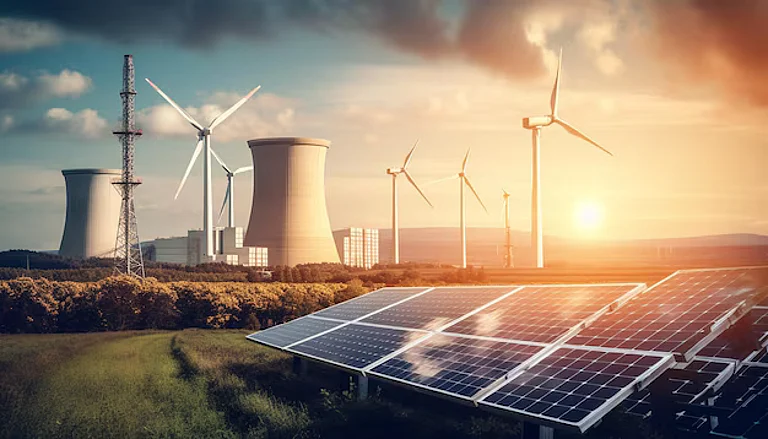
Commercial and industrial solar panels installed on rooftops Photo by Pixabay
Summary
Advertisement
India's renewable energy capacity under the commercial and industrial (C&I) segment is expected to increase to 60-80 GW by 2030, with such installations exceeding 6 GW in 2025 alone, a senior official told PTI on December 4.
The C&I are non-residential electricity users like factories, office buildings, retail stores, schools, and hospitals. They can either install RE capacity on their land or premises or developer can set up plants for them for supply of green power to them.
Addressing the CII IndiaEdge event, New & Renewable Energy Secretary Santosh Kumar Sarangi said, "There is also going to be an increasing induction of RE through C&I contract. We have seen an increasing trade in the last couple of years and this year I believe C&I installation will exceed about 6 GW.
The official said that by 2030, C&I RE capacity will be between 60 GW and 80 GW. "If our data centre projection remains steady, then about 60 GW to 80 GW of RE will be provided by the developers to C&I consumers. Similarly distributed RE is going to wrap up in a very big way. We have seen massive induction in the last couple of years," he added.
Advertisement
This assumes significance in view of India's ambitious target of having 500 GW of renewable energy by 2030. This year, between PM-KUSUM and PM Suryaaghar Yojana, about nine GW of capacity addition has already happened, and we estimate that this will touch about 12 GW by the end of the year, he stated.
Given India's growth forecasts, the demand for electricity will rise exponentially if GDP grows at a rate of 6.5% or higher over time. According to him, renewable energy will play a major role in satisfying this demand.
He said, "We have already initiated a VGF scheme for induction of battery at transmission and distribution level, and that is only going to intensify. Our least cost pathway suggests that we need to add about 240 GWh of battery storage by 2047 and to that extent, there is a need to quickly adapt battery technologies.
Advertisement
"We expected to reach 65GW solar module by June 2026, and we are working on ways in which this achievement in module will be supplemented by the manufacturing capacity of ingot, and polysilicon," he added.
He suggested that by adding more C&I and decentralised renewable energy capacity, India is freeing up demand.

Rapid C&I Solar Growth
According to Mercom India, India added roughly 6.1 GW of open‑access commercial and industrial (C&I) solar capacity in the first nine months of 2025 alone, raising cumulative open‑access solar capacity to around 27.9 GW — clear sign that C&I installations are growing quickly.
While the cumulative open-access C&I solar capacity has grown rapidly, the Q3 2025 Solar Open Access Market Report by Mercom India noted a 20% decline in installations from the previous quarter due to delays in restricted substation access, grid-connectivity approvals, and limited transmission evacuation capacity in states with weak grid infrastructure. However, capacity still surged nearly 108% year-on-year.
Advertisement
(With inputs from PTI.)