Himalayan fire risks now span seasons, overwhelming reactive suppression-only strategies.
Prevention requires incentives, watershed finance, carbon-aligned funding, and community livelihoods.
Smoke, water security and disaster costs justify sustained public investment.
How to Turn the Forest Fire Season into Prevention Season
Turning Himalayan fire response into year-round prevention through incentives, finance and resilience

Forest fire prevention and resilience efforts in India’s Himalayan states
Summary
Advertisement
India’s Himalayan states now enter a familiar phase much earlier than they used to. Forest departments prepare for ignitions, hill towns brace for smoke and communities begin to live with disruption as if it were an unavoidable tax. What is new and deeply concerning is that this is no longer confined to the traditional pre-monsoon window. Winter fire events are increasingly being reported even in higher-altitude landscapes of Uttarakhand and Himachal Pradesh, signalling that the window of vulnerability is stretching well beyond what was once considered the “fire season”.
This shift exposes a deeper problem. Himalayan fire management is still organised around a seasonal mindset, while fire risk is becoming year-round. When fires were fewer, shorter and easier to contain, a reactive approach may have sufficed. It no longer does.
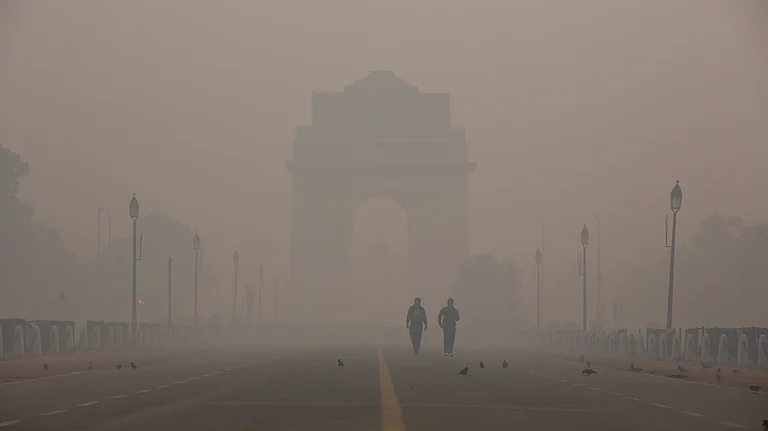
The Indian Himalaya is not a collection of isolated forests. It is a connected landscape where fire affects watersheds, slope stability, tourism, rural livelihoods and, increasingly, air quality far beyond the mountains. Smoke trapped in valleys and transported downwind turns a forest fire into an airshed event, with public health consequences that rarely enter fire planning. In this context, a strategy that relies mainly on suppression is not a strategy. It is a recurring emergency.
Advertisement
The more practical question, therefore, is not how to fight fires better, but how to make the fire season governable.
The answer lies in shifting the centre of gravity from firefighting to prevention and resilience. This is not a rhetorical call for “more awareness”. It requires incentive pathways, dependable finance and technology that supports decisions on the ground. Himalayan fire management must reward prevention as routine work, fund risk reduction as a public good, and treat smoke as a public health outcome rather than an incidental by-product.

Prevention Needs a Payroll
The first reform is also the simplest. Prevention is work and work should be paid.
Across the Himalaya, village institutions and local crews are often the earliest responders. Yet their participation remains largely voluntary and episodic. A performance-based community incentive programme can change this. Van Panchayats, Joint Forest Management Committees, self-help groups and village fire crews should receive payments tied to verifiable outputs: maintenance of fire lines and water points, fuel removal in priority patches, patrol coverage on high-risk days, rapid reporting of ignitions and safe first response until trained teams arrive.
Advertisement
The design must avoid tokenism. Incentives should be linked to measurable performance, not attendance at meetings. Verification can be supported through simple geo-tagged reporting and random checks. If the state expects communities to reduce risk, the state must also share value with them for doing so.

Make Carbon Finance Serve Risk Reduction
Fire is not only an immediate hazard. It is also a driver of gradual forest degradation and carbon loss. This creates an opportunity for carbon finance, but only if it is framed with discipline.
A realistic pathway is to bundle fire prevention, fuel management and post-fire restoration into carbon-aligned programmes where applicable, focusing on reduced degradation and stabilised carbon stocks. The emphasis must be on conservative accounting, safeguards, transparency and credible MRV. Carbon finance should not be marketed as a substitute for public funding. It should be used as patient capital to support what public budgets often underfund: sustained fuel reduction, assisted natural regeneration, slope and spring-shed restoration and long-term monitoring of outcomes.
Advertisement
If designed carefully, carbon revenue can make prevention predictable. That predictability is what allows systems to function year after year, rather than collapsing once project cycles end.

Treat Fire Resilience as Watershed Finance
A second finance shift is equally important. Fire management is still too often framed as a forestry expenditure. In the Himalaya, this is a category error.
The strongest case for investment is risk reduction for watersheds and disasters. A landscape-scale restoration and fire-resilience package should allow states to pitch integrated programmes combining soil and water conservation, assisted natural regeneration, fire-resilient species in appropriate zones, slope stabilisation and spring-shed protection. The argument is not only about trees. It is about reduced sedimentation, more stable flows, fewer slope failures and lower disaster costs.
This framing also opens doors to blended finance. Investors and development agencies may not fund firefighting but they can fund resilience if outcomes are defined clearly and measured consistently.
Advertisement
Put Numbers to What We Avoid Losing
Prevention often loses in budgets because its benefits are dispersed and long-term, while its costs are immediate and visible. This is precisely why ecosystem services valuation matters.
States should quantify the benefits of reduced burned area in terms of avoided erosion, avoided sediment loads, improved watershed protection, biodiversity benefits, reduced smoke exposure and avoided expenditure on emergency response. Total Economic Value framing is not an academic exercise. It is a way to justify stable public allocations for prevention, equipment, training and post-fire recovery. If Himalayan forests protect water and reduce disaster risk, then fire prevention should be funded as infrastructure protection.
Payments for Smoke and Water Protection
In the Himalaya, upstream fires impose downstream costs. Municipal bodies, utilities, tourism operators and downstream communities benefit when upstream forests do not burn. Cleaner air, more reliable water flows and reduced silt loads are not abstract services. They are real economic outcomes.
This creates a logic for Payments for Ecosystem Services, particularly in river basins where beneficiaries are identifiable. A well-designed PES model can support upstream fuel management, community brigades and restoration, financed by downstream stakeholders who benefit from lower risk. Those who gain from reduced smoke and stable water should contribute to the upstream work that delivers it.
.jpg?auto=format%2Ccompress&fit=max&format=webp&w=768&dpr=1.0)
Insurance, Livelihoods and Smoke as a Health Risk
Even the best prevention cannot eliminate all fires. The Himalaya also needs instruments that reduce fiscal shock in severe years. Fire risk-linked green insurance and parametric cover can be piloted with triggers based on fire danger indices, burned area thresholds or sustained smoke episodes. Payouts can support rapid response, restoration works and livelihood buffers.
Fuel build-up is one of the most avoidable drivers of high-intensity fire. Community enterprises for pine needle and litter collection, converted into briquettes, pellets, biochar or compost, can turn prevention into a steady livelihood. Guaranteed offtake, sustainability caps and transparent revenue sharing are essential.
At the same time, smoke must be treated as a public health issue. Advisories, guidance for schools and outdoor work and preparedness for respiratory surges should be triggered routinely during fire episodes. Prevention spending should be justified through climate and health co-benefit accounting, because avoided emissions and avoided illness are real public gains.
A New Contract for the Fire Season
India’s Himalayan states do not need seasonal firefighting alone; they need year-round prevention. That requires a prevention economy built on three pillars: incentives that pay communities for measurable prevention work, finance that treats fire resilience as a public good, and technology that turns early signals into early action. Forest fires may remain part of the Himalayan ecology, but smoke and disruption need not remain part of its politics.
(Sayanta Ghosh is associate fellow, land resources, while JV Sharma is senior director, land resources at TERI. The views expressed are personal.)