Indian outlets lead in substantive climate–health reporting share.
Fewer than 0.1% articles linked climate change to health.
Study analysed 22.5 million articles across three countries.
India Leads US, China in Substantive Climate Health Coverage, Says Study
Study finds India leads in climate–health media framing

climate coverage amid a protest
Summary
Advertisement
Indian news outlets hold the highest proportion of substantive climate–health coverage among India, the United States and China, according to a study published in the journal, The Lancet Planetary Health.
The researchers warned that overall coverage of linking climate change and public health remains extremely limited across all three countries.
As reported by The Hindu, the report drew from a dataset of more than 22.5mn newspaper articles published during the time period, the researchers first identified stories that mentioned climate change. These amounted to just 0.3% of the total corpus.
From this subset, articles that also referred to health were further screened and manually coded to assess whether they substantively discussed climate change as a public health issue rather than making a passing reference.

The study also indicated that fewer than 0.1% of all published articles across the three countries over the 11 years provided substantive coverage of climate change in relation to health. Among climate-focused stories, explicit discussion of health impact was uncommon. However, within this limited pool of coverage, Indian newspapers stood out. In a validated sample, 46.4% of Indian articles that mentioned both climate change and health were found to substantively frame the issue through a public health lens. This compares with 31.3% in the United States and 17% in China.
Advertisement
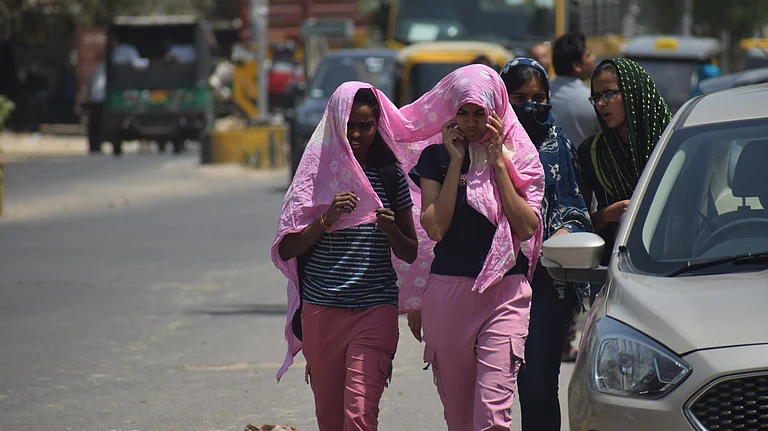
The study further stated that the most frequently discussed health impacts included extreme heat, extreme weather events, such as floods and storms, air pollution, food insecurity and broader public health risks. Indian coverage was more likely to connect climate change to everyday lived experiences, including heatwaves, agricultural stress and urban air quality.
The study, titled The evolution of news coverage about climate change as a health issue - a decadal analysis in China, India and the USA, was co-authored by Professor Deepti Ganapathy, Visiting Assistant Professor of Management Communication at Indian Institute of Management Bangalore (IIM-B), along with international collaborators. It analyses how leading newspapers in the world’s three largest carbon-emitting nations have covered the health impact of climate change over an 11-year period from 2012 to 2023.
According to the World Health Organisation, climate change has been described as the “single biggest health threat facing humanity,” citing rising heat stress, vector-borne disease and food insecurity.
Advertisement
The Lancet Countdown on Health and Climate Change in 2025 similarly warned that delayed action will intensify health burdens, especially in vulnerable populations worldwide.