Nearly half the world could face extreme heat by 2050, study finds.
Heat exposure rises sharply before crossing the 1.5 degrees Celsius warming threshold.
Developing countries face steep increases in cooling demand and heat stress.
About Half of World Could Face Extreme Heat by 2050—Here’s Why
New research warns extreme heat exposure will surge as global temperatures near 2 degrees Celsius

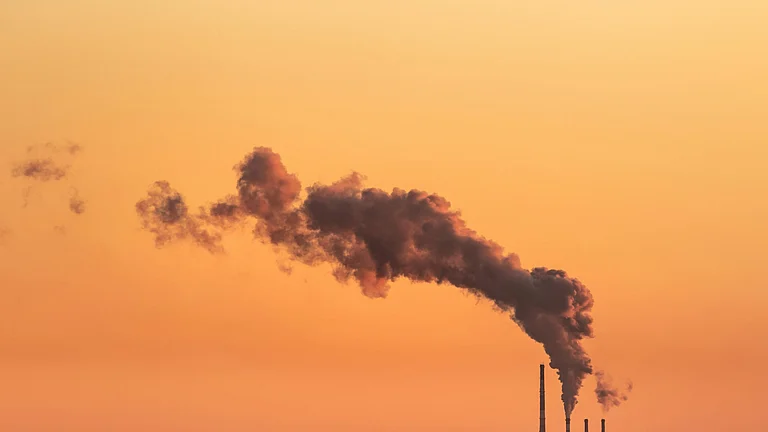
Extreme Heat exposure Photo by Eclipse Chasers
Summary
Advertisement
Almost half of the global population (3.79bn) will be living in extreme heat by 2050 if the world reached 2 degrees Celsius of global warming above pre-industrial levels—a scenario that climate scientists see as increasingly likely, according to the report published in the journal Nature Sustainability.
The Oxford report further stated that people experiencing extreme heat is expected to double from 23% (1.54bn people) in 2010 to 41% (3.79bn) by 2050, with the largest projected populations affected in India, Nigeria, Indonesia, Bangladesh, Pakistan and the Philippines.
The report warned that most of the impacts will be felt early on as the world crosses the 1.5 degrees Celsius set by the Paris Agreement.
Jesus Lizana, lead author and associate professor of engineering science at the University of Oxford stated in the report that most of the changes in cooling and heating demand occur before reaching the 1.5 degrees threshold. This, he added, “will require significant adaptation measures to be implemented early on.”
Advertisement
The study's findings are expressed in heating degree days (HDD) and cooling degree days (CDD), which are metrics frequently used in weather forecasting and climate research to determine whether heating or cooling is required to keep people in safe temperatures.
The degree to which daily mean temperatures diverge from a reference temperature threshold over a specified time period is measured by HDDs and CDDs.
In order to assess the effects of climate change on the global heating and cooling industry, the study created a global dataset for three global warming levels above pre-industrial conditions: 1.0 degrees Celsius (based on 2006–2016 observations), 1.5 degrees Celsius, and 2.0 degrees Celius, regardless of when these occur.
The countries that saw the biggest shifts in CDD were mostly developing countries in South America and Africa. According to the report, the countries with the biggest increases in dangerously hot temperatures were Brazil, Nigeria, South Sudan, Laos and the Central African Republic.
Advertisement
The authors cautioned that each country's area-weighted mean CDDs would rise by 524–560 CDDs, which would significantly increase the amount of cooling required per person.

Intensified Global Warming
A 2021 report published by the Intergovernmental Panel on Climate Change (IPCC) stated that limiting warming to close to 1.5 degrees Celsius or even 2 degrees Celsius will be beyond reach unless immediate, rapid and large-scale reductions in greenhouse gas emissions are deployed.
The IPCC report also showed that emissions of greenhouse gases from human activities are responsible for approximately 1.1 degrees Celsius of warming since 1850-1900, and finds that averaged over the next 20 years, global temperature is expected to reach or exceed 1.5 degrees Celsius of warming.