For every dollar spent worldwide on protecting nature, nearly $30 is spent on activities that harm it, according to a new United Nations Environment Programme report.
Global Finance Still Favours Nature-Damaging Activities Over Protection, Says Report
UN report exposes massive funding gap as global finance continues to favour nature-damaging activities

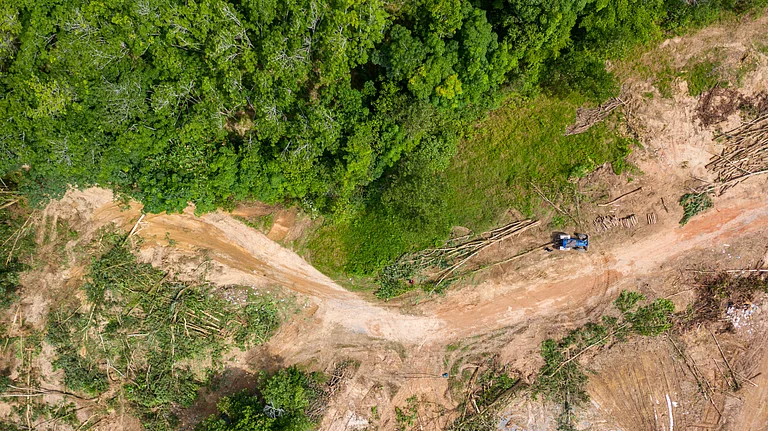
A degraded ecosystem highlights the growing cost of nature loss driven by harmful investments
Advertisement
The UN Environment Programme’s State of Finance for Nature 2026 report shows that funding for nature-damaging activities touched $7.3trn, while investment in nature-based solutions stood at just $220bn. This sharp imbalance, the report warns, is worsening the interconnected crises of climate change, biodiversity loss and pollution.

Global Nature Funding Imbalance
According to UNEP, spending on nature-negative activities totalled $7.4trn in 2023. Of this, around $5trn came from private investment concentrated in a small number of high-impact sectors, including utilities, industrials, energy and basic materials.
A further $2.4trn was channelled through environmentally harmful subsidies, largely supporting fossil fuels, agriculture and water use, the report said.
The UNEP report stressed that investment in NbS must increase by at least 2.5 times to reach $571bn per year by 2030 and to more than triple to $771bn by 2050 to reach Rio Convention targets. As of 2024, spending on NbS accounted for just 0.5% of global gross domestic product.
Advertisement
The report is intended as both a financial assessment and a technical analysis that would support policymakers, businesses, financiers and civil society in making informed decisions about scaling up NbS investment while reducing nature-negative capital flows or the capital flows that harm ecosystems.

Harmful Capital Still Dominates
Public domestic expenditure on NbS associated with sustainable agriculture, forestry and fisheries fell by around 4% between 2021 and 2023, declining from $69bn to $66bn. Finance for NbS through environmental policy and wastewater management also dropped over the same period, by $980mn and $620mn respectively.
Private philanthropy channelled about $271mn into NbS in 2023, marking a sharp decline of around 60% since a peak of $692mn in 2021. The value of nature-based carbon offsets in voluntary carbon markets fell by 57% in 2023, reflecting growing caution among buyers over project integrity and methodologies.
Advertisement
Why It Matters
This imbalance has direct economic and social consequences. UNEP and the World Economic Forum (WEF) have warned that over half of global GDP is moderately or highly dependent on nature, making ecosystem degradation a material financial risk.
According to a 2020 WEF report, about 25% of assessed plant and animal species are threatened by human actions, with a million species facing extinction, many within decades. In addition, businesses are more dependent on nature than previously thought, with approximately $44trn of economic value generation moderately or highly dependent on nature.
Increasing nature-positive finance can improve climate resilience, safeguard livelihoods, and lower long-term costs associated with resource scarcity, food insecurity and disasters.