Govt launches targeted interventions to slash pollution across Delhi-NCR by 2027.
Source apportionment study by IIT-Delhi, TERI, IITM Pune and ARAI underway.
EV incentives, traffic management and ANPR systems to reduce vehicular emissions.
Centre Plans 15–20% Cut in Delhi-NCR Air Pollution by 2027, Says Environment Minister Bhupender Yadav
Centre aims to cut Delhi-NCR air pollution 15–20% by 2027

Environment Minister Bhupender Yadav
Summary
Advertisement
The Centre is planning to reduce air pollution levels in Delhi-National Capital Region (NCR) by 15-20% by 2027 with the help of state agencies, according to Minister for Environment, Forest and Climate Change Bhupender Yadav.
Speaking at an Idea Exchange session on January 27 at The Indian Express on the eve of the Budget session of Parliament, Yadav said the government was still ready to debate air pollution, and criticised the Opposition for disrupting proceedings when the issue was slated for debate on the last day of the winter session. “We are taking efforts to slash air pollution by 15-20% by next year… we have to sustain the effort. I will not lie, the situation will not change overnight. We have to reduce it up to 20% each year,” Yadav said.
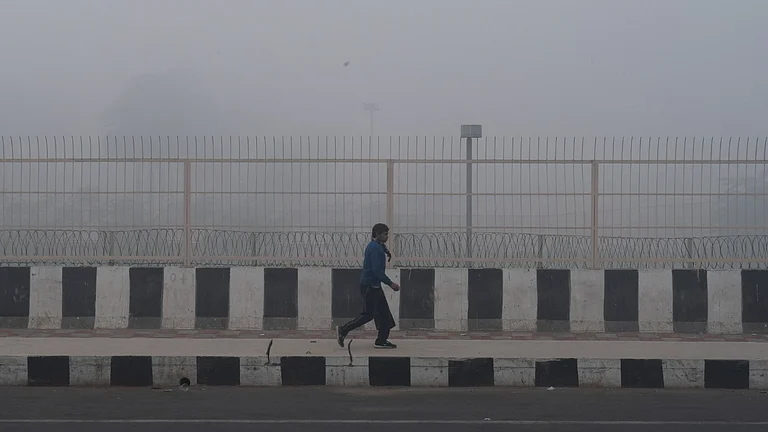
The Environment Minister had resounded the same concerns at a high-level meeting on air pollution in the National Capital Region (NCR) on January 12, 2026, reported Hindustan Times. A key outcome of the meeting was the launch of a comprehensive source apportionment study beginning January 2026. The study, which is already underway, is being conducted by premier institutions including The Energy and Resources Institute (Teri), IIT-Delhi, IITM Pune and Automotive Research Association of India (ARAI) to scientifically identify the contributing sources of pollution across the Delhi-NCR airshed, enabling more targeted interventions, according to a statement by the Union ministry of environment, forest and climate change (MoEFCC).
Advertisement
The meeting also dedicated significant attention to vehicular emissions which are a major contributors to pollution in NCR. Plans were also discussed to initiate smart traffic management at 62 identified congestion hotspots.
Measures such as installation of Automatic Number Plate Recognition (ANPR) systems at border entry points, and exploration of staggered office timings to reduce peak-hour congestion were also taken up. In addition, incentivisation of electric vehicles, accelerated expansion of charging infrastructure, congestion charges, smart parking management and a uniform vehicle registration policy for NCR were discussed in the meeting held on January 12.
The meeting was attended by the Secretary (MoEFCC), Chairman, Commission for Air Quality Management (CAQM), Senior officers from MoEFCC and State Government of NCT Delhi. Also present in the meeting were senior officers from CPCB, Delhi Pollution Control Committee (DPCC), NDMC, Delhi Metro, Delhi Police and PWD.
Advertisement
Heavy Economic Cost of Air Pollution
According to a 2024 World Bank report, air pollution incurs a heavy economic cost on India, cutting productivity, raising healthcare costs and reducing labour output.
Lost output from premature deaths and morbidity due to air pollution in India accounted for economic losses of $28.8bn and $8bn, respectively in 2019. This total loss of $36.8bn was 1.36% of India's gross domestic product (GDP). This indicates why pollution control in Delhi-NCR is not just an environmental goal but also an economic necessity.