Tropical Cyclones Senyar and Ditwah kill thousands, displacing millions across Asia.
Rising sea temperatures intensified storms, making flooding and landslides more destructive.
Children, wildlife and infrastructure face severe impacts, highlighting urgent climate risks.
Climate Change Supercharged November Storms Across Asia, Says Report
Supercharged November storms devastate Southeast Asia, fueled by heat and deforestation

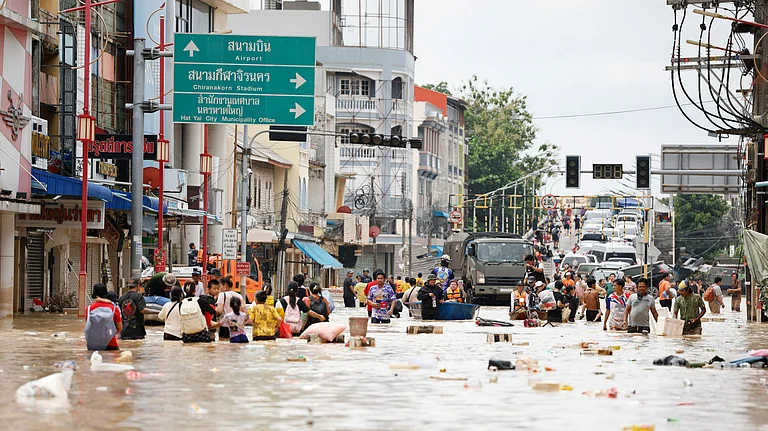
Relief workers navigate floodwaters caused by supercharged tropical storms in Southeast Asia Photo by Associated Press
Summary
Advertisement
The devastating storms that hit Sri Lanka, Indonesia, Malaysia and Thailand in late November were "supercharged" by higher sea temperatures and made worse by rapid deforestation, according to a World Weather Attribution report published on December 10.
Tropical Cyclone Senyar devastated large parts of Southeast Asia after forming in the Malacca Strait, killing nearly 1,200, including 969 on the Indonesian island of Sumatra. At least $3bn in relief funds are required to fix the damage, reported Reuters.
Sri Lanka was hit by floods and landslides caused by Tropical Cyclone Ditwah, recording at least 635 fatalities and economic losses estimated at around $7bn.
The World Weather Attribution report further stated that during the most intensive five days of rainfall, sea surface temperatures in the North Indian Ocean were 0.2 degrees Celsius higher than the 1991-2020 average, packing the storms with additional heat and energy.
Advertisement
Without the 1.3 degrees Celsius rise in global mean temperatures since the pre-industrial age, the sea surface in the area would have been around one degree colder in late November, they estimated.
While there is no proof that climate change has increased the frequency of tropical storms, scientists claim that rising sea temperatures are increasing the destructiveness of individual storms, which are common during the monsoon season.
"What is not normal is the growing intensity of these storms and how they are affecting millions of people and claiming hundreds of lives," said Sarah Kew, climate researcher at the Royal Netherlands Meteorological Institute and the study's lead author.
The researchers stated that the increase in extreme rainfall linked to the rise in global temperatures could amount to 9% to 50% in the Malacca Strait and 28–160% in Sri Lanka, even though they were unable to pinpoint the exact contribution of climate change to the storms. Additionally, scientists have cautioned that as storms develop in new locations and take distinct paths, more areas may be vulnerable to extreme weather.
Advertisement
Environmental and Community Impacts
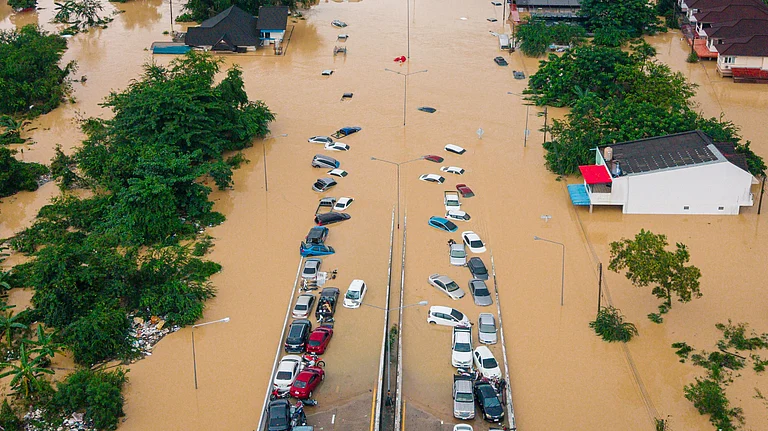
The November storms caused widespread destruction beyond initial reports, with nearly 11mn people affected and massive displacement across South and Southeast Asia, including severe infrastructure and utility damage, according to the United Nations Office at Geneva. Children bore a disproportionate share of the impact, losing access to schools and clean water, according to a report published by UN Children’s Fund (UNICEF) on December 4. More than 4.1 million children across the region have had their education disrupted since late November alone, stated the UNICEF report.
In Indonesia, floodwaters and landslides have devastated habitats, threatening endangered species like Tapanuli orangutans due to habitat loss from floods and ongoing deforestation, reported by Reuters. Emergency responses continue amid calls for improved disaster preparedness and environmental safeguards.