Mining in Aravalli may worsen air pollution across Delhi-NCR.
Groundwater contamination linked to Aravalli mining threatens urban water supply.
Biodiversity, climate regulation and desert prevention are at serious risk.
Mining in Aravalli Hills Threatens Air and Water in Delhi-NCR — Here's Why
Unchecked mining risks pollution, water scarcity and biodiversity loss

Aravalli Hills play a vital role in Delhi-NCR’s environment
Summary
Advertisement
Delhi-NCR has been reeling under severe air pollution and Aravallis have gripped attention as environmentalists, citizen groups such as People for Aravallis, scientists and opposition parties, including the Congress and Samajwadi Party, argue that the proposed height-based definition would leave more than 90% of the range’s low-lying ridges, foothills and scrublands without strong protection.
They warn that this could lead to increased mining, real estate projects and urban expansion, causing irreversible harm—intensifying desertification, depleting groundwater, eroding biodiversity and worsening air pollution and water scarcity across north India.
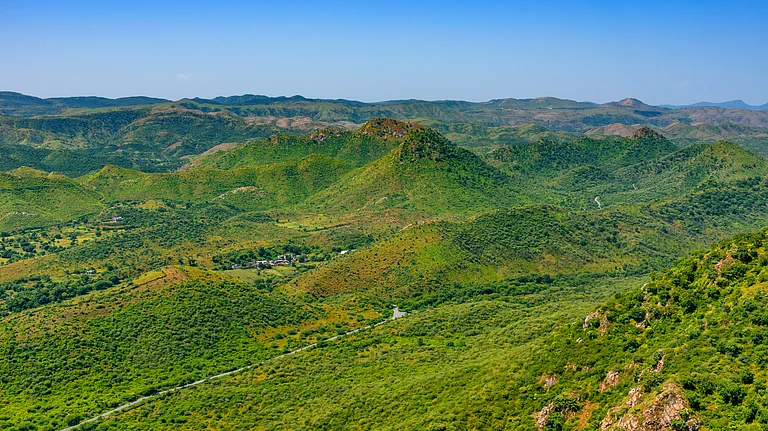
How Aravalli Hills Help Control Pollution
According to Ministry of Environment, Forest and Climate Change, Aravalli acts as a natural barrier preventing the eastward spread of the Thar Desert, supports groundwater recharge for rivers like the Chambal and Luni, maintains biodiversity and helps moderate climate and air quality in the National Capital Region (NCR).
The Aravalli range is also one of the main Indian watersheds, separating the drainage of the Bay of Bengal through rivers like Chambal and other tributaries of the Yamuna from that of the Arabian Sea through the Mahi, Sabarmati, Luni and other rivers. Two rivers in Haryana, three rivers in Gujarat, and twelve rivers in Rajasthan originate from the Aravalli.
Advertisement
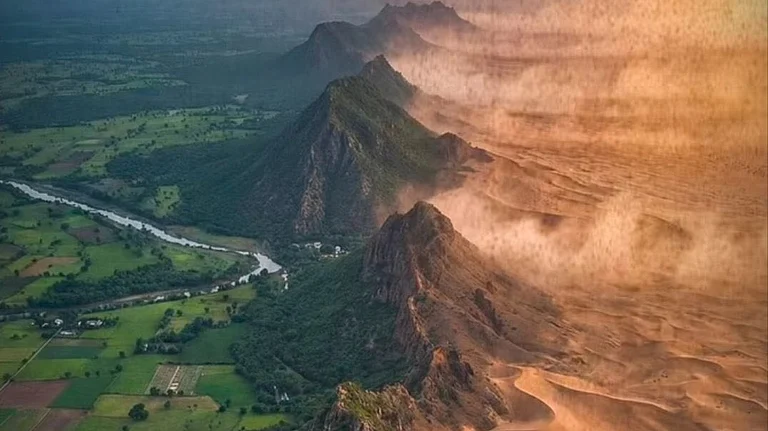
Why Protection of India’s Oldest Mountain Range Matters
Delhi-NCR’s ecological balance is closely linked to surrounding natural systems such as the Aravallis, forest patches and groundwater recharge zones. These systems help regulate temperature, support water security and reduce environmental stress from rapid urbanisation. Integrating ecological considerations into land-use planning and regional development strategies can significantly reduce long-term urban risks.
According to ANI, The Aravalli range is a mountain range in the north-western part of India that spans for about 670-kilometre-long. The highest elevation of the range has been recorded at 1,722 metres.
The hill starts near Delhi, passes through Haryana, Rajasthan, and ends in Gujarat. The highest peak of the range is known as Guru Shikhar, in Mount Abu, Rajasthan. The Aravalli range is the oldest fold-mountain belt in India, dating back around 2bn years.
In addition to air pollution, Aravallis also play a significant role in controlling groundwater contamination in Delhi.
Advertisement
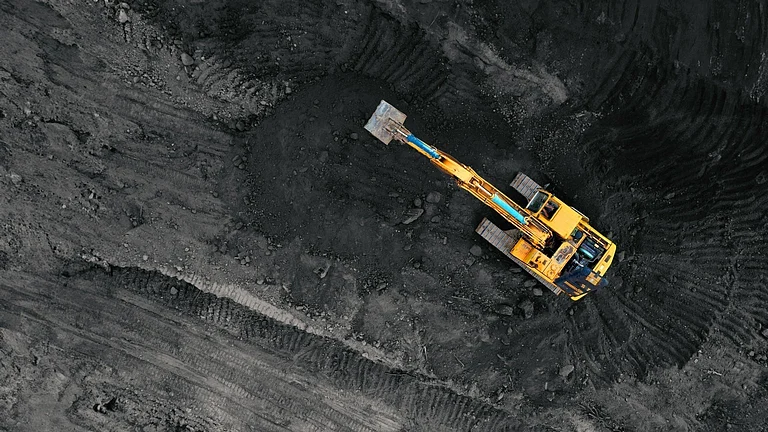
Groundwater Risks Loom
According to the US National Library of Medicine, studies on Delhi’s groundwater show that serious contamination is linked to mining in the Aravalli Hills.
The study found that national capital’s water quality index (WQI) ranges from 2.15 to 94.03. The result indicated serious deterioration as groundwater quality of Delhi mostly lies in the category of poor to very poor quality.
Using water quality indices and health risk assessments, researchers found poor to very poor water quality, elevated hazard levels across age groups, and clear spatial links to mining zones, underscoring the need for sustainable mining and stronger groundwater management.