The India-EU free trade agreement is expected to benefit a wide range of domestic sectors and deepen India’s trade engagement with one of the world's largest economic blocs, experts said.
India-EU FTA To Benefit Multiple Sectors, Deepen Trade Engagement Across Globe: Experts
Negotiations for the agreement have been concluded and expected to come into force later this year

India-EU FTA To Benefit Multiple Sectors, Deepen Trade Engagement Across Globe: Experts
Advertisement
Negotiations for the agreement have been concluded and expected to come into force later this year.
The experts said that the agreement announced on January 27 is set to significantly transform India's automotive sector by attracting foreign direct investment into its auto component industry and fostering deeper integration into global value chains.
"The India–EU trade pact marks a significant step forward in strengthening market access and trade competitiveness," Sanjay Budhia, Chairman of CII's National Committee on Exports and Managing Director of Patton International Ltd, said.

He added that the deal is expected to provide preferential access across a host of traded goods, creating meaningful opportunities for domestic businesses.
"The agreement is likely to benefit multiple sectors and deepen trade engagement across one of the world's largest economic corridors," Budhia said.
Echoing similar views, Saurabh Kanchan, Partner, Deloitte India, said the pact makes a significant departure from the country's existing FTAs, with India agreeing to bring down tariffs on passenger cars from 110% to 10% over time.
Advertisement
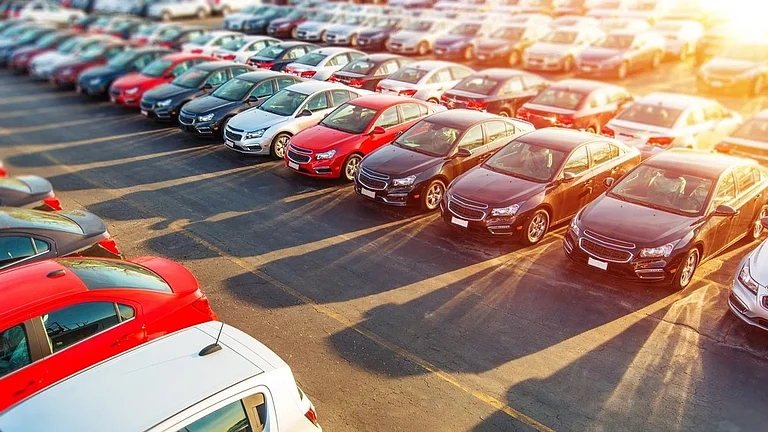
"Car manufacturers in India should be able to absorb this concession, given India's annual market size of 4.3 million plus units and growing," he said, adding it would be important to understand the trade-off for automotive exporters in India.
Srinivas Kuchibhotla, Partner, Deloitte India, said that currently the two-way trade exceeds $136 billion, and execution of the pact holds immense opportunity and potential for both sides.
"FTA will not only lower tariffs that have contained value-added agri-food exim trade between India-EU, but it also stops short of full liberalisation for sensitive staples," he said.

While the agreement opens growth opportunities for value-led agri exports, eventually the benefits realised will depend on aligning trade policies with reforms on the policy front, Kuchibhotla said.
Rudra Kumar Pandey, Partner at Shardul Amarchand Mangaldas, too said that the agreement is set to significantly transform India's automotive sector by attracting foreign direct investment into its auto component industry and fostering deeper integration into global value chains.
Advertisement
"Given that EU automotive supply chains currently source a meaningful share of components from countries such as China, Japan, South Korea, and, in certain categories, Turkiye and Mexico, improved market access combined with trade facilitation can tilt future sourcing decisions toward India," Pandey added.
President of the Berlin Chamber of Commerce (IHK Berlin), Sebastian Stiezel, described the trade deal as an important step towards opening up in an increasingly tense global situation.
Stiezel added that India is no longer a future market, but a market of the present, in which Berlin should now seize the opportunities.
President of the German Association of the Automotive Industry (VDA) Hildegard Mueller hailed the agreement and said it sends a strong signal of decisive action, describing it as an important step for both regions, and especially for Germany as an export nation.
Advertisement
Sharing similar views, Thilo Brodtmann, Managing Director of the German Engineering Federation (VDMA), hailed the conclusion of the FTA, stating that Europe is sending an unmistakable signal for rules-based trade.