For millions, the Ganga is not merely a river; she is Maa. A living Goddess who is invoked at birth, marriage and death, and anywhere in between. Ashes are consigned to her waters with the faith that she will carry souls towards salvation. It is said she flows through heaven, earth, and the underworld, earning her the name Tripathaga, one who travels three paths.
Quiet Flows The Ganga
The Ganga is not just a river. She is a story, a memory and the pulse of a civilisation, and hence, the mission to cleanse her waters.

Advertisement
The Origin Story
She does not begin as a river. At least, not as we imagine her. Flowing and free. Majestic, yet silent. As described in the poignant words of Bhupen Hazarika’s Ganga behti ho kyun. She begins as a trickle of freezing water, high in the Himalayas. She emerges quietly from the Gangotri, as water finds the courage to move.
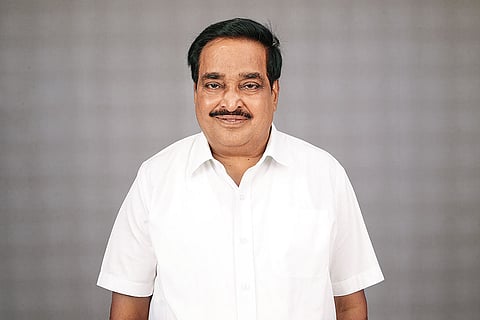
Shri C.R. Paatil Hon’ble Minister of Jal Shakti, Ministry of Jal Shakti, Govt. of India
Known as the Bhagirathi, she gathers strength from snow and silence and descends into the plains. At Devprayag, where the Bhagirathi meets the Alaknanda, she becomes the Ganga. Winding through Haridwar, Varanasi, Prayagraj and Patna, she irrigates fields, supports livelihoods, and anchors rituals that have survived centuries.
A Living Myth
A living presence in Hindu mythology, she was summoned by King Bhagiratha from the heavens to cleanse the ashes of his ancestors. She did, but with waters that threatened to wipe out life on earth. Lord Shiva caught her tumultuous waters in his locks, softening her fall before letting her flow freely. The story endures as a reminder that power, particularly when uncontrolled, must be guided, and respected. Yet, neither her nurturing presence nor devotion have protected her from pollution.
Advertisement
“The preservation of rivers is not just a duty but an act of reverence, as every river is called ‘mother’ in our culture.”
According to Prime Minister Narendra Modi, “Amid our tradition and culture’s unbreakable bond with Mother Ganga, it is our collective responsibility to keep her clean. With the Namami Gange campaign, this initiative of India is now being recognised around the world.”
Jal Shakti minister C.R. Paatil reiterates, “India is a land of rivers. The world’s finest river, the Ganga, flows in India. It is our duty not to pollute our rivers.”
To speak of the Ganga is to speak of faith alongside fragility, reverence alongside responsibility. The Namami Gange Programme under the National Mission for Clean Ganga is a beacon of hope, an act of renewal, an effort to reconcile modern life with a river that has given India both sustenance and soul.

Follow The River
Advertisement
A quick journey to trace the vision, milestones and impact of India’s most ambitious river conservation effort, the National Mission for Clean Ganga
The Mission: The Namami Gange Programme started in June 2014 as a flagship programme to clean and rejuvenate the Ganga and its tributaries.
The Vision:
To ensure Aviral Dhara (continuous flow)
Nirmal Dhara (unpolluted water)
Maintain ecological integrity across the Ganga basin
Aims and Objectives:
Pollution abatement: Reduce pollution and improve water quality
Ecological restoration: Protect biodiversity, enhance river flow and conserve ecosystems
Public participation: Foster community awareness and engagement
Sustainable management: Promote scientific planning and research
Grounding the Mission: The mission has evolved into a broader river governance framework. A robust structure operates from the National Ganga Council to District Ganga Committees (DGCs). The Empowered Task Force and State Ganga Councils ensure coordination between ministries and governments.
139 District Ganga Committees across basin districts are chaired by District Magistrates. They oversee pollution sources, sewage and waste management, and hold regular 4M meetings (Monthly, Mandated, Minuted, Monitored) to track progress.
Innovative Approach:
National Mission for Clean Ganga has adopted an innovative approach, developing a comprehensive IT and research-based system to address aspects of river rejuvenation. This approach covers the entire life cycle of river system management, addressing requirements at different stages of river rejuvenation, and is unique internationally.
Advanced Technology Based Monitoring Framework:
NMCG has strengthened the monitoring framework through parametric monitoring of water quality at all STPs and CCTV-based monitoring of STP operations. Public disclosure of STP performance has improved accountability. To address drains flowing into the Ganga, LiDAR and Drone surveys have been conducted to identify drains. A drain dashboard assigns drains to responsible agencies, enabling focused infrastructure management.
A platform for Real Time Monitoring of Yamuna & Ganga (PRAYAG) has been developed which integrates water quality and STP performance data Geo-PRAYAG maps spatial and historical river data Online dashboards enable transparent monitoring Serves as a digital backbone for river governance
Technology Based Biodiversity Conservation:
National Mission for Clean Ganga has introduced technological innovations to strengthen conservation of the Ganga River, wetlands, and biodiversity, enhancing monitoring of endangered species and community participation. At the Garaita Centre in the National Chambal Sanctuary, the SMART tool supports conservation. NMCG uses radio telemetry, acoustic telemetry, PIT tags, and GPS to track animal movement, migration, and survival.
Research & Development (R&D):
Supports scientific river management through GIS mapping, riverbed and aquifer studies, and basin level planning, strengthening data driven policy.
Citizen Centric approach & Public Outreach: Namami Gange has adopted a people centric approach with comprehensive public outreach including community, cultural educational outreach. Ganga Utsav is celebrated annually around Ganga Dussehra to honour the river’s importance.
Achievements & Accolades:
300+ projects completed out of nearly 500 initiated
Improved water quality and biodiversity
Recognised by the UN among Top 10 World Restoration Flagship Projects
Winner of Global Water Award – Public Water Agency of the Year
Recipient of SKOCH Gold Standard Award (State Mission for Clean Ganga – Uttar Pradesh)
Advertisement

The Mystic River
The Namami Gange Mission helps protect the Ganga and encourages urban growth in ways that respect the river
For centuries, the Ganga has flowed through India’s hills, plains and Faith. Now, it flows through one of the nation’s most ambitious and well-planned efforts to heal the environment.
The Namami Gange Mission was created to rejuvenate a river that flows for over 2,500 kilometres and sustains nearly half of India’s population. More than a clean-up drive, it is an effort that brings together government, researchers, local authorities and communities. For the future of many towns and cities is inseparable from the future of the river that sustains them.
How the Mission flows
Rejuvenating a river as vast as the Ganga calls for a well-oiled system. The Ministry of Jal Shakti tops the tier, providing policy direction and guidance. It ensures that the mission prioritises water management, sanitation and environmental protection.
Advertisement
The NMCG is the central body responsible for planning, funding, coordinating and monitoring all efforts to cleanse the river. It oversees the projects and tracks the river’s health.
The work then moves closer to the river through the State Programme Management Groups (SPMGs) that operate in Ganga basin states like Uttarakhand, Uttar Pradesh, Bihar and West Bengal. They work with urban local bodies, agencies and contractors for projects that address the specific needs of cities and towns.
At the grassroots of this endeavour are the District Ganga Committees. Chaired by the District Magistrate, these monitor drains, sewage and waste management and ensure the proper use of assets. They strengthen the people’s connection with river rejuvenation through regular 4M meetings (Monthly, Mandated, Minuted and Monitored).
The Wildlife Institute of India and international collaborators support the mission. They conduct biodiversity assessments, the Ganga River Dolphin Action Plan, and water-quality monitoring across more than 3,000 locations.
The Ganga Knowledge Centre
The Ganga Knowledge Centre (GKC) was established to create a knowledge base, analyse data and enable research. It works with national and international universities, institutions and NGOs to fill gaps in river science and policy.
The 67th Executive Committee of NMCG also approved several research projects.These include glacier monitoring of the Himalayan headstreams and development of a Digital Twin and Water Cycle Atlas for the Ganga Basin. Along with high-resolution SONAR riverbed surveys, it manages aquifer recharge studies over paleochannels.
PRAYAG (Platform for Real-time Analysis of Yamuna, Ganga and their Tributaries) is an online dashboard set up in 2023 to monitor water quality, project progress and performance of the sewage and common effluent treatment plants. Making this information visible and accessible, PRAYAG helps take informed decisions and promotes transparency.
The Pillars Of A Living River
The NMCG rests on six connected pillars, each looking after a crucial facet of the river’s health. One of the main components of this effort is sewage treatment infrastructure. By January 2025, the Mission had launched 206 projects. Of these,127 are operational and create a treatment capacity of 3,446 MLD — a 30-fold increase over pre-2014 levels.
Biodiversity conservation recognises the Ganga as a living ecosystem. The Gangetic Dolphin population has grown from 3,330 in 2018 to 3,936 in 2024, while over 1.43 crore Indian Major Carp fingerlings have been released to revitalise aquatic life and support local fishermen. Along its urban areas, riverfront development and surface cleaning have transformed the river’s facade. There have been 307 projects to modernise ghats and crematoria, while surface cleaning keeps the water accessible and safe for communities.
Afforestation and public awareness work hand in hand. Around 33,024 hectares of riverbanks have been planted. The Ganga Quest campaign has turned the mission into a Jan Andolan, involving citizens across age groups. Hundreds of Grossly Polluting Industries (GPIs) are now being monitored to ensure that untreated waste no longer reaches the river.
The Ganga Gram Initiative has transformed rural sanitation and today, 99 percent of villages along the river’s banks are open-defecation free.

Aquifer Mapping Management
Aquifer mapping under Namami Gange looks beneath the river’s surface to secure its future flow. The programme strengthens the Ganga’s natural rhythm while easing water stress across the basin. Advanced tools such as remote sensing, drones and smart water management systems guide this work.
The NMCG, in collaboration with IIT Kanpur, has launched a pioneering study of the river’s long-term transformation. Rare Corona satellite images from 1965 are being compared with high-resolution imagery from 2018-19. Together, they reveal how barrages, embankments, cities and agriculture have reshaped the river over five decades. The findings will help planners identify stretches where the river can be restored to a more natural, ecologically balanced form.
An advanced Web-GIS platform is being developed to map land use, river morphology and basin changes, with data hosted on Google Earth Engine for easy analysis. Digital decision-support systems are being created for nine key locations, from Haridwar to Farakka. Aquifer mapping in Prayagraj has already improved groundwater recharge, supporting Aviral Ganga. The discovery of a 200-kilometre-long buried ancient river in the Ganga–Yamuna doab, has also opened new insights.
GIS-based Drain Dashboard
The Empowered Task Force recently met to review the implementation of the integrated drain-monitoring initiative under the Namami Gange Programme, including the development of a GIS-based Drain Dashboard for the GKC. High-resolution aerial and drone surveys along the Ganga main stem in Uttar Pradesh have generated precise geospatial datasets, now being integrated into a live dashboard with 2D and 3D visualisation. This platform combines LiDAR-based scientific data with visual inputs to enable basin-level pollution monitoring.
In the meeting of the ETF, Jal Shakti minister C.R. Paatil stressed field-level validation by District Ganga Committees and stronger inter-departmental coordination for drain-based pollution management.
The NMCG is also introducing CCTV-based real-time surveillance of Sewage Treatment Plants, integrated with AI-enabled feature extraction and a centralised monitoring dashboard. This visual monitoring layer complements existing Online Continuous Effluent Monitoring Systems (OCEMS).
Gyan Ganga Initiative
The Mission also aims for river-focused education under its Gyan Ganga initiative. This includes post-graduate programmes, short certification courses, and fully funded degrees like the MSc in Freshwater Ecology and Conservation at the Wildlife Institute of India. These programmes train professionals and communities in river science, conservation and sustainable management.
It’s a Mission Possible
The Ganga reflects the impact of these interventions. Water quality monitoring shows an improvement in Biochemical Oxygen Demand (BOD) levels, an indicator of organic pollution. In Uttar Pradesh, BOD levels have fallen from 10–20 mg/l in 2015 to a healthier 3–6 mg/l by 2022.
The Mission has now been extended to March 2026. The target comprises a cumulative sewage treatment capacity of 7,000 MLD by December 2026.
Guarding the Ganga
The story of Namami Gange is one of patient renewal. For a river shaped over millennia cannot be restored overnight. By strengthening institutions, grounding decisions in science, and drawing people into the process, the mission has created a framework that endures beyond timelines.
As the mission moves towards river-sensitive planning, its significance grows deeper. In caring for the Ganga, Namami Gange offers more than a cleaner river. It offers a model of coexistence, where development flows in harmony with nature.

Celebrating The River
Where the river is revered, and cities learn to listen
For centuries, cities evolved along rivers. Drew sustenance, culture and meaning from them. But over time, many of these cities turned their backs on the river. The National Mission for Clean Ganga has sought to reverse this distance, through culture, celebration and public participation.
The Ganga Utsav
This spirit comes alive through the Ganga Utsav, a festival dedicated to the life, culture and conservation of the river. Organised on 4 November to mark the day the Ganga was declared India’s National River, the Utsav has evolved into a nationwide platform.
The 2024 edition, held at Chandi Ghat in Haridwar, was the first time the main celebration unfolded on the riverbank in the presence of Union Minister for Jal Shakti C.R. Paatil. The 9th edition of Ganga Utsav in 2025 brought together knowledge, research and people’s participation through an international conference, a youth-led Riverathon and grassroots engagement to deepen the river–people connect.
V. L. Kantha Rao, Secretary, Ministry of Jal Shakti, graced the occasion, with the participation of NMCG officials, District Ganga Committees, students and citizens.
Of Awareness and Adulation
At the Ganga Utsav, discussions sit alongside cultural performances. Children and young people engage through quizzes, film screenings and art workshops focused on cleanliness and ecology. Each edition renews the river’s spiritual significance, placing conservation and scientific planning at the centre of public conversation.
An Alliance for the Ganga
This effort finds its counterpart in the River Cities Alliance (RCA), an effort to place rivers back at the heart of urban planning and governance. Launched by the Ministry of Housing and Urban Affairs and the National Mission for Clean Ganga in 2021, the Alliance aims to help cities grow in ways that respect a river’s natural flow.
The Alliance connects over 100 river cities that exchange ideas on riverfront management, wastewater treatment, flood resilience, biodiversity protection and citizen engagement. At its core lies the understanding that healthy rivers and healthy cities are inseparable. Poorly planned growth leads to pollution, flooding and ecological loss, while thoughtful planning can improve water quality, public spaces, livelihoods and climate resilience.
The Alliance began with 30 cities and expanded to over 140 across river basins such as the Ganga, Yamuna, Narmada, Godavari and Sabarmati. Cities including Kanpur, Ayodhya, Moradabad and Bareilly have prepared Urban River Management Plans, embedding river health into their decisions. The idea has travelled beyond India too, with the emergence of a Global River Cities Alliance linking cities worldwide.
A Relationship That Endures
Through Ganga Utsav and the River Cities Alliance, the mission moves beyond cleaning rivers to rebuilding relationships with them. Carrying forward the spirit of Namami Gange, it reminds us that the future of India’s cities depends on learning to live with the flow, not against it.