Supreme Court seeks joint proposal to relocate coal-based industries.
States asked to invite stakeholder views on phasing-out process.
Air pollution concerns drive renewed scrutiny of thermal plants.
Supreme Court Directs Centre to Identify Coal Units for Delhi-NCR Phase-Out
Top court seeks joint plan to relocate coal-based industries from Delhi-NCR

Supreme Court directed the ministries of environment and petroleum & natural gas to submit a joint proposal to identify and shift all coal-based industries out of Delhi-NCR
Summary
Advertisement
The Supreme Court on February 23 directed the ministries of environment and petroleum & natural gas to submit a joint proposal to identify and shift all coal-based industries out of the Delhi-National Capital Region, including identification of viable alternative fuel sources, according to The Economic Times.
The governments of Delhi's neighbouring states, Uttar Pradesh, Haryana and Rajasthan, were asked by a bench led by Chief Justice of India Surya Kant to publish public notices soliciting feedback and objections from interested parties, including coal-based industries, regarding the proposed phase-out. Such notices will be regarded as having been issued in accordance with the court's authority, it stated.
The bench order stated that the proposal should first identify industries and determine what alternative fuel sources can be provided from them.
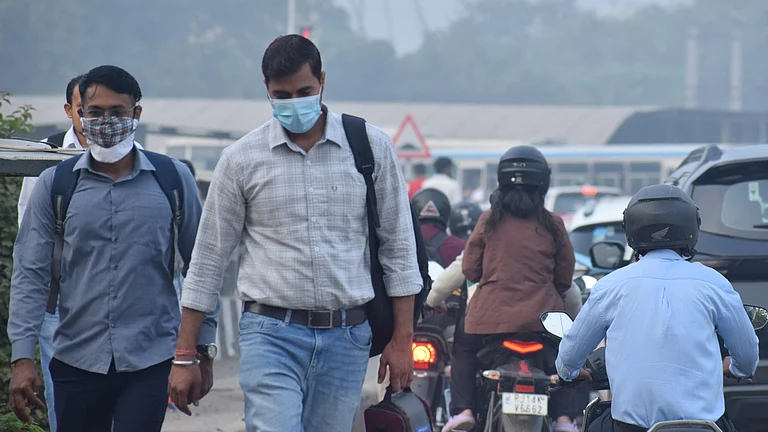
According to an interim arrangement, Haryana, Delhi and other authorities concerned will examine the feasibility, logistics, location and operational modalities of such industries pending a final decision, the court said, while noting a proposal from the Commission for Air Quality Management that no new coal-based thermal power plant will be allowed within 300 km of the national capital. The court further directed the NCT of Delhi to file a detailed 'action taken' plan to operationalise those measures.
Advertisement
The court is expected to examine the issue of vehicular air pollution on March 12. In January, the top court had directed the commission to convene a meeting of experts to identify major causes of the worsening air quality in the capital. In addition, the apex court had asked the commission to prepare a report on the causes of pollution based on the deliberations at the meeting.
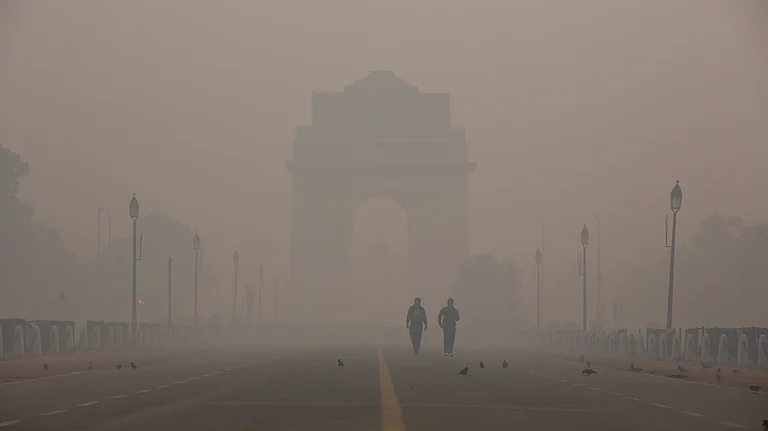
Air Quality Levels Remain Poor
The matter pertains to Delhi’s ongoing air pollution crisis, with the Air Quality Index (AQI) recording poor average of past 24 hours air quality levels at 239 on February 24 at 4 pm, according to the Central Pollution Control Board.
The deteriorating air quality comes despite recent forecasts from the India Meteorological Department that predicted generally clear skies and rising daytime temperatures, which can sometimes help disperse airborne pollutants. According to India Meteorological Department (IMD), evening and night-times mist acts to trap emissions close to the surface. IMD also predicted surface winds of 15–25 kilometres per hour on February 25 and 26 but experts cautioned that these speeds are likely insufficient to clear the stagnating pollution quickly. The daily maximum temperature in Delhi is expected to hover between 29 and 31 degrees Celsius, while minimums range from 12.4 to 13.6 degrees Celsius over the next week.
Advertisement
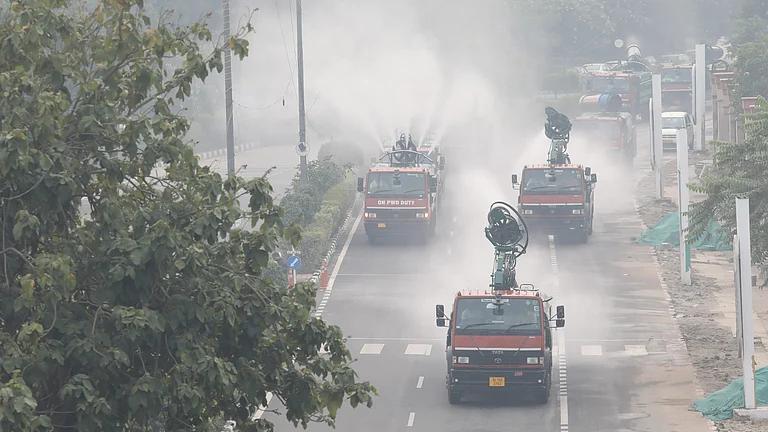
Coal and Air Pollution
A recent Centre for Research on Energy and Clean Air (CREA) study revealed that thermal power plants in the region are responsible for emitting 16 times more air pollution than stubble burning.
According to a Centre for Science and Environment (CSE) report published in November 2023, the air pollution in Delhi-NCR is being worsened by intransigence of thermal power plants, most of which are not complying with emission control norms.
"Delhi and NCR cannot meet the clean air benchmark and protect public health if the continuous sources of pollution like thermal power plants remain high emitters. These plants have not been able to meet the standards and are at varying stages of progress simply because the target dates for compliance are shifting continually,” Anumita Roychowdhury, Executive Director, Research and Advocacy, CSE, stated in the news release published by CSE.
Advertisement