Adani Green plans over 7 GWh battery storage at Khavda by FY27.
Grid evacuation delays push storage as key solution to power curtailment.
Storage enables peak-hour dispatch, improving revenues and grid reliability.
Adani Green to Add Over 7 GWh Battery Storage at Khavda Amid Grid Constraints
Adani Green accelerates battery storage expansion at Khavda to manage grid constraints and advance renewable utilisation

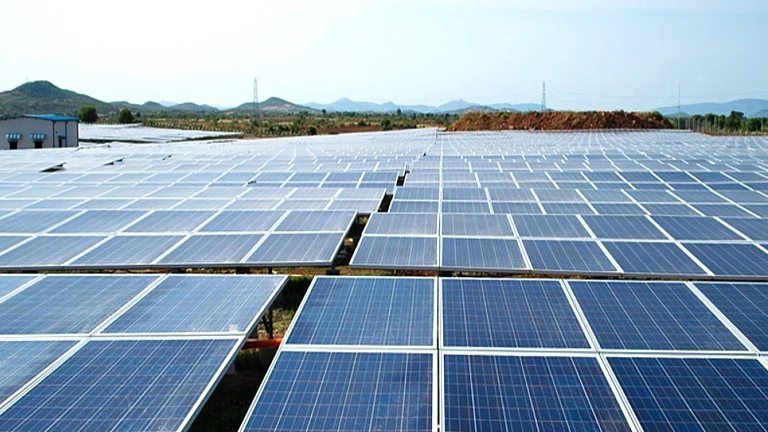
Adani Green Energy plans renewable energy installations at Khavda in Gujarat. Photo by Magda Ehlers
Summary
Advertisement
Adani Green Energy is planning a to add battery storage systems (BESS) at its Khavda renewable energy park in Gujarat, eyeing more than 7 GWh of storage capacity by FY27 amid challenges posed by grid evacuation constraints, according to Hindu BusinessLine.
The accelerated BESS rollout forms a central part of Adani Green’s capital expenditure plans for 2027. The company expects FY capex to exceed the current year’s spending and fall in the range of ₹25,000-40,000 crore. Adani Green Energy CEO Ashish Khanna said funding visibility remains strong, with debt already sanctioned to support the next phase of expansion.
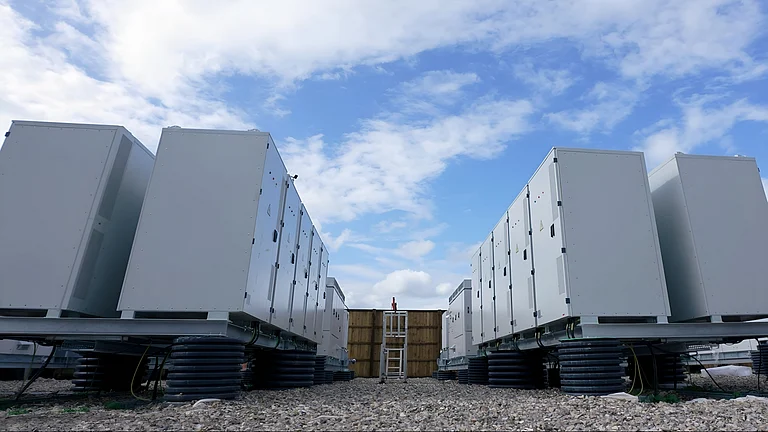
The company expects to commission 3.5 GWh of BESS capacity by end of the current financial year. Ashish Khanna, CEO of Adani Green Energy, told Hindu BusinessLine,“On a short term basis, the battery storage will help in absorbing the power which would otherwise have been curtailed.” He added that storage provides flexibility while long-term evacuation capacity is aligned with project commissioning.
Advertisement
The company had formally announced its entry into battery storage at Khavda in November 2025.
Battery storage has emerged as a strategic priority for the company amid delays in transmission augmentation at Khavda, located near the India-Pakistan border in Kutch district. Khanna said storage will help absorb generation that would otherwise face curtailment, while longer-term evacuation capacity is aligned with project commissioning timelines.
At Khavda, grid evacuation restrictions are still a temporary problem, and seasonality and right-of-way issues are causing delays in the anticipated transmission augmentation. According to Khanna, the company had expected two to three more evacuation capacities in the previous quarter, but that hasn't happened yet.
Increasing Storage Demand
According to the India Energy & Climate Center report, India will need 61 GW of energy storage capacity by 2030 and 97 GW by 2032 to support its clean energy targets.
Advertisement
Having a reliable storage system is necessary to manage intermittency, reduce renewable curtailment, defer costly transmission upgrades and provide grid stability during peak demand.
In regions that have significant solar capacity, large load centers and states with limited peak capacity such as Rajasthan, Guajarat, Maharashtra, Uttar Pradesh, Andhra Pradesh and Telangana, batter storage locations are expected to align closely to help store excess electricity, reduce wastage and ensure a more stable and reliable power supply.