Northern Japan shaken by second 6.7-magnitude earthquake within a week.
Japan Meteorological Agency warns tsunami waves could hit northern Pacific coastline.
Communities focus on resilience amid recurring seismic activity and historical earthquake risks.
Japan Jolted by Another 6.7-Magnitude Quake, Tsunami Alert Issued for Coastal Areas
Second 6.7-magnitude quake hits northern Japan, triggering tsunami advisory for coastal regions

Earthquake in northern Japan Photo by Associated Press
Summary
Advertisement
A 6.7-magnitude earthquake hit the region off northern Japan on December 12, the weather office said, days after a 7.5-level tremor in the same region injured at least 50 people, reported Associated Press.
Citing Japan Meteorological Agency, Associated Press reported that the quake occurred off the east coast of Aomori prefecture, in the north of Honshu, the main Japanese island, at a depth of 20 kilometers (12.4 miles) at 11:44 a.m. local time.
The JMA, upgrading its initial estimated magnitude of 6.5, also warned that tsunami waves of up to one metre (three feet) could hit the northern Pacific coastline.
The United States Geological Survey (USGS) also said that the quake measured 6.7 and was 130 kilometres off the city of Kuji in Iwate prefecture on the main island of Honshu.
The Nuclear Regulation Authority said on December 12 that there were no immediate signs of abnormalities at the region’s nuclear facilities.
Advertisement
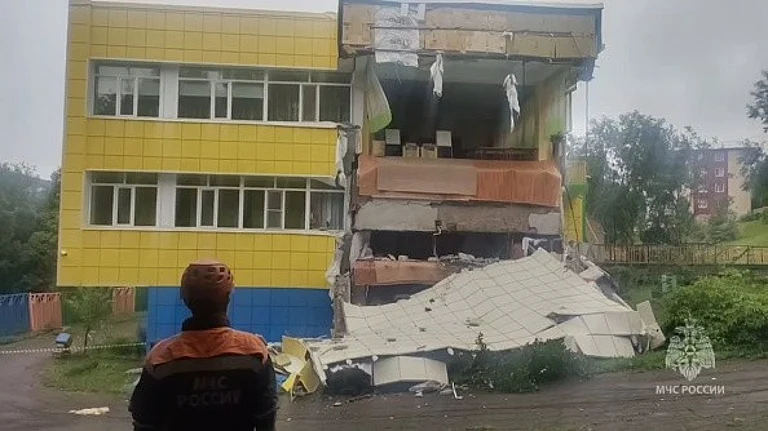
Tremor on December 8
Broadcaster NHK said that the level of shaking was less than the bigger tremor late December 8 which knocked items off shelves, tore apart roads, smashed windows and triggered tsunami waves of up to 70 centimetres.
The December 8 earthquake off the coast of Aomori, the northernmost prefecture of Japan's main Honshu island, reportedly caused at least 34 injuries. Before all tsunami advisories were lifted, Kuji Port in Iwate Prefecture recorded a tsunami that was more than two feet (0.6 meters) above the tide levels. Hundreds of homes lost power, but on the morning of December 9, most of it was restored.
Following the tremor on December 8, the JMA had published a rare special advisory warning that another quake of similar or greater size was possible for another week.
Advertisement
The advisory covered the Sanriku area on the northeastern tip of Japan’s main island of Honshu and the northern island of Hokkaido, facing the Pacific.
The region is haunted by the memory of a massive 9.0-magnitude undersea quake in 2011, which triggered a tsunami that left around 18,500 people dead or missing.
Japan sits on top of four major tectonic plates along the western edge of the Pacific “Ring of Fire” and is one of the world’s most seismically active countries.
The archipelago, home to around 125mn people, experiences around 1,500 jolts every year.
The vast majority are mild, although the damage they cause varies according to their location and depth below the Earth’s surface.
Strengthening Community Resilience
According to the report published by World Bank in 2013, communities that take the lead in their own recovery rebuild more quickly and sustainably, with citizens contributing to housing and infrastructure.
Advertisement
According to another research published in BMC Public Health in 2023, strong social ties and local knowledge enhance long-term resilience by improving collective responses and recovery outcomes following crises. Collaboration at the grassroots level aids in mobilising the trust and resources needed to rebuild networks and lives.